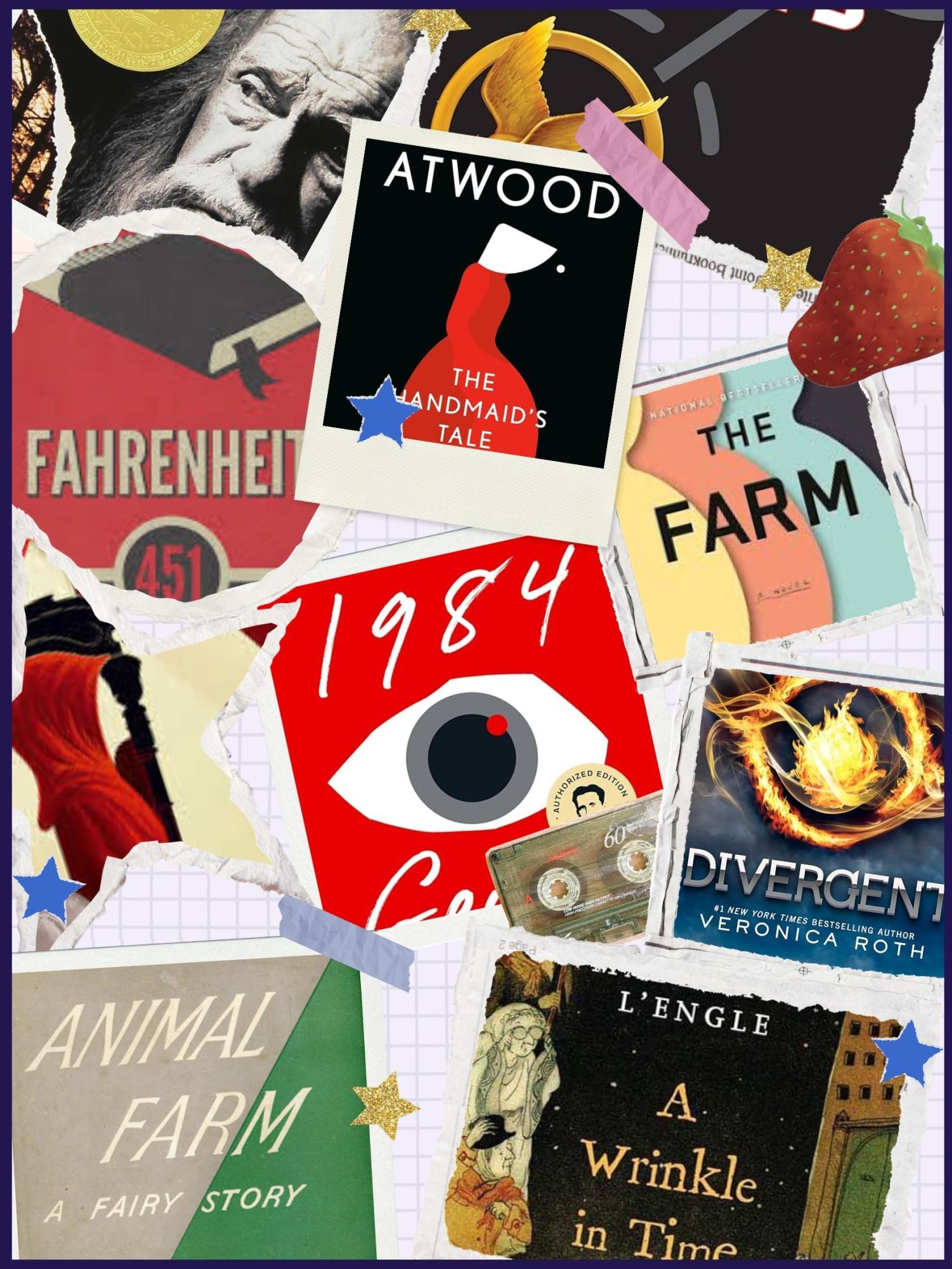
Books are windows into many worlds. They put into words abstract thoughts, feelings, and experiences of human nature. Some talk about the real world and some make new ones, but there’s a certain kind of book that does both. Dystopian novels are a type of speculative fiction that imagines an alternative world characterized by extreme oppression or disastrous forces. While these may seem like fictional stories and fantastical plots like many other favorite fantasy books, they subtly comment on the past and present of our real lives.
Fahrenheit 451 by Ray Bradbury

Fahrenheit 451 by Ray Bradbury is one of the most well-known dystopian novels. This book depicts a society where books are banned and burned to foster an uninformed and submissive public that retreats to their widescreen homes, where they’re absorbed into their television flat screens, allowing the government to utilize them as consumers who no longer have the ability to make their own decisions.
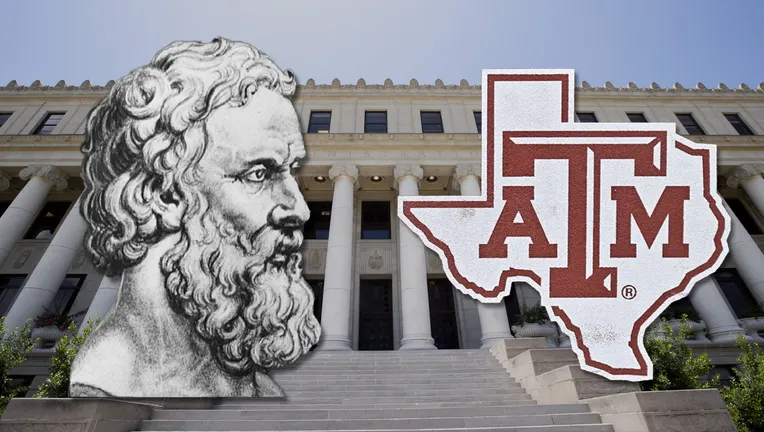
The theme of intentional disinformation among the working class isn’t just a novel concept but a very real issue that we face in our society. There are books being banned across states, and particularly in school districts here at Dallas ISD, where teachers are required to report what books they keep on their bookshelves in order to lend them to students. For example, recently at Texas A&M University, a philosophy professor was even reprimanded for including Plato’s work in his curriculum and was instructed to remove it before he taught it to students. Censorship is prevalent throughout our world, and Bradbury exemplifies its cost accurately.
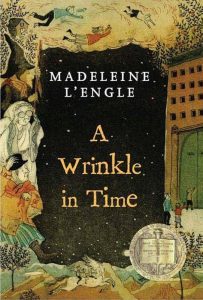
A Wrinkle in Time by Madeleine L’Engle
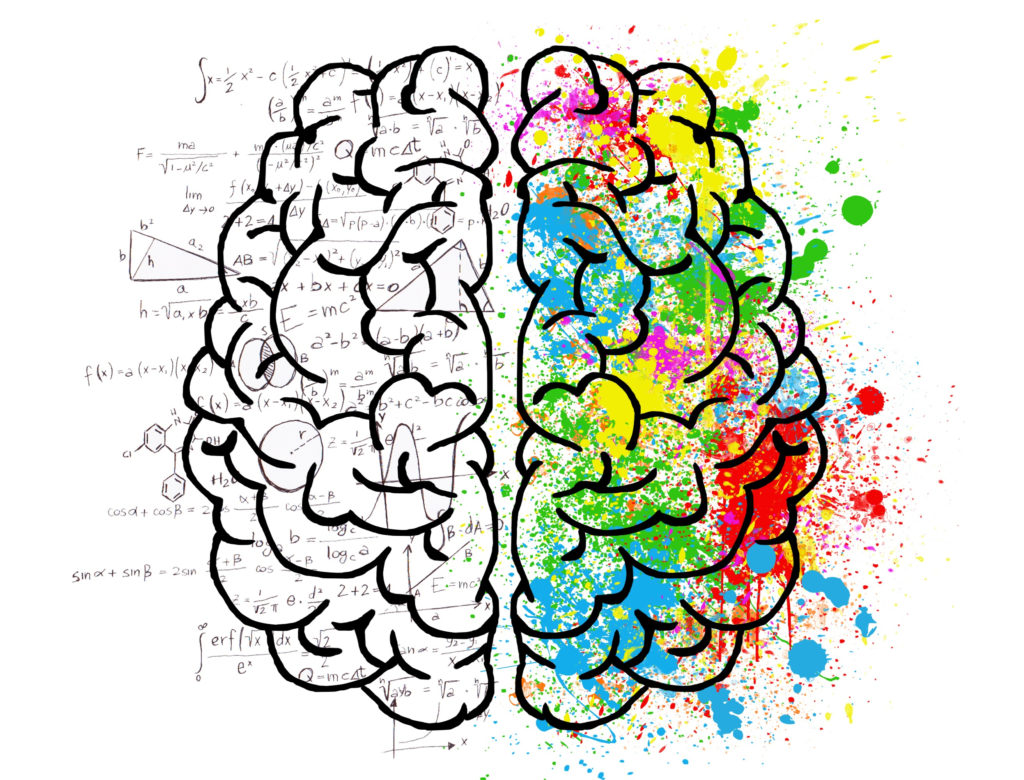
A Wrinkle in Time by Madeleine L’Engle is another dystopian novel that focuses on themes of conformity and the risks of imposing that upon a diverse population. In the book, the main characters travel to another planet where all houses and activities look exactly the same because they are controlled by one brain (literally), which keeps them captive.
In our world, we’ve seen conformity being instated on a smaller scale. Late last year, the Fifth Circuit Court in Louisiana heard the case of Roake v. Brumley, which addressed the debate around Louisiana House Bill 71, which requires Ten Commandments posters to be prominently displayed in kindergarten through 12th grade classrooms across the United States. The hearing revealed statements from legislators that were included with the bill.
These records show the sponsor of the bill who expressed his reason for supporting it, stating that “it is important that our children learn what God says is right and what is wrong and for the Ten Commandments to be displayed in classrooms as a visual aid.” In another statement, Representative Taylor stated, “I really believe we are lacking in direction. A lot of people, their children are not attending churches or whatever. So what I’m saying is we need to use something in schools to bring them back to where they need to be.”
These statements by representatives of the United States accurately depict how religious conformity is slowly being implemented through the legal system upon U.S. residents. The statements ignorantly fail to recognize that the United States was built to be a diverse nation tolerant of different religions and home to communities of many faiths, whose children should not be required to go to school every day seeing a poster on their walls on which the first line states “thou shalt have no other gods.” Although the proponents of this bill try to persuade judges that this was not an act of religious repression, these legislative statements show that the purpose of the bill is exactly that.
1984 by George Orwell
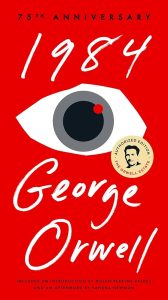
George Orwell’s 1984 is another dystopian novel that focuses on the dangers of government digital control and invasive surveillance into private lives. Many recognize that this is already prevalent in our societies because there’s so much information about us connected to our cellular devices that the government can easily obtain. The 2020 documentary The Social Dilemma explains this issue by reminding us that social media does not inherently sell a product, because we consumers are the products, or at least our habits are. The documentary pointed out that social media is designed to collect information and profits off of “gradual, slight, imperceptible change in your own behavior and perception.”
This is also apparent in biased media reporting, which does not allow the average everyday person to see what is actually going on without a filter. We’re not able to view events from an objective lens because they have already been altered in a way to sway us by news anchors. The lack of media literacy amongst people and within the education system is intentional and keeps people from fully understanding the ongoing political events impacting their lives every day.
The Hunger Games by Suzanne Collins
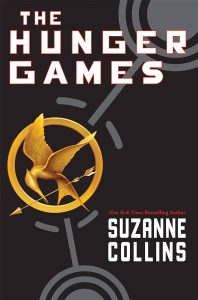
The Hunger Games also depicts a broken society in which the elites starve the working class and routinely force them to participate in deadly games to regulate the total population. This book exemplifies the extreme economic inequality present in America even today. Each year more families are sinking below the poverty line while the rich get richer, slowly eliminating the middle class. The top one percent holds most of the wealth as described in the Hunger Games books, while the working class provides most of the resources to keep the country alive.
This nods to the ignorance and avoidance of some real world issues when it comes to the one percent elite. Many people criticized the Met Gala, which occurred simultaneously with the genocide in Gaza, arguing it was entirely immoral for these wealthy celebrities to be throwing grand parties instead of allocating their wealth and resources to people suffering in war-affected regions and refugees from those areas.
The Hunger Games also touches on the absurdity of war in which young citizens are drafted fresh out of high school, lured in with promises of relieving higher education debt but at the cost of their lives. These youths are sent out to fight wars they have little part in, only for solidarity to their country. This exploitation is similar to what is described in the books, where young people are forced to participate in government conflicts.
Moral of the Stories
These novels and many others provide cautionary tales of what our society could be or is already slowly becoming. They remind us to be acutely aware of the injustices and oppression constantly surrounding us and to not play a passive role by permitting that when it appears in our lives. These novels remind us to think for ourselves, speak out, and resist, and they remind us of the grave consequences if we don’t.