The National Collegiate Athletic Association (NCAA) annual college basketball tournament is just around the corner. This tournament, dubbed March Madness, is known for its buzzer beaters and high-pressure coaching decisions. But beyond the tournament itself, the sidelines tell us a different story. Throughout the years, what coaches wear during March Madness has evolved alongside the sport, reflecting changing social norms, leadership styles, and cultural expectations. From rigid suits to bold fashion statements, coaches’ clothing has become a subtle but powerful form of expression. And in women’s college basketball, fashion has taken over an even deeper meaning— one tied to visibility, authority, and identity.
The early years 1950’s-1970’s
In the early days of college basketball, coaches dressed like executives. Men’s coaches such as Dean Smith (North Carolina) and Adolph Rupp (Kentucky) were almost always seen in dark suits, pressed ties, and dress shoes. They were all about seriousness, discipline, and control. Coaching was viewed as an extension of institutional authority, and fashion reinforced that hierarchy.
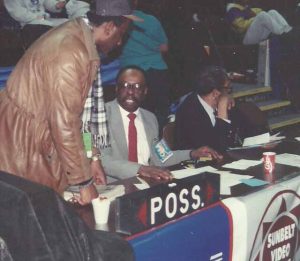
At the same time, Black coaches like John McLendon, one of the first Black coaches to integrate college basketball, wore similarly conservative suits. For McLendon, fashion was not about standing out but about being accepted in a system that closely scrutinized Black leadership.
For women entering the sport during this era, clothing choices were far more complicated. Coaches like Judy Sweet (UCLA women’s) had to navigate expectations of professionalism while asserting authority in a male-dominated environment. Women coaches would often wear conservative blazers and skirts to be taken seriously. Their fashion was about survival and legitimacy.
1980’s-1990’s
As college basketball gained television exposure, coaches began developing recognizable public personas. Men like Rick Pitino (Kentucky/ Louisville) became known for bold, colorful suits that matched their intense, animated coaching styles. The sideline became a stage, and fashion helped coaches stand out.
This era also produced one of the most iconic Black coaches in NCAA history: John Thompson Jr. (Georgetown). His signature towel over the shoulder and commanding presence made him instantly recognizable. His fashion was as powerful as his clothing, emphasizing authority and confidence during a time when Black coaches were still rare at the highest levels.

In women’s basketball, icons such as Pat Summitt (Tennessee) and C. Vivian Stringer (Rutgers) stood out. Stringer’s tailored suits and composed demeanor helped establish her as a model of professionalism and leadership in women’s sports.
Y2K
By the early 2000s, coaching fashion shifted toward cleaner, more practical looks. Mike Krzyzewski (Duke) popularized slim, neutral-toned suits that emphasized professionalism without distraction. The focus moved away from bold patterns and toward precision and control, mirroring the increasingly strategic nature of the game.
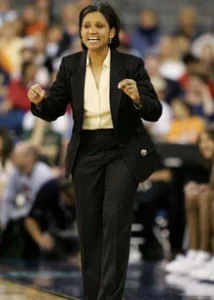
Women’s basketball experienced a rise in visibility, and women coaches began redefining courtside professionalism. Dawn Staley, early in her coaching career, embraced tailored blazers and streamlined silhouettes that balanced authority with approachability. Her style reflected confidence and leadership at a time when women were still fighting for recognition in coaching spaces.
Other women coaches, such as Sylvia Hatchell (North Carolina) and Pokey Chatman (LSU), also moved toward pantsuits and practical tailoring, prioritizing mobility and comfort over traditional expectations. This era marked the turning point where coaches were no longer dressing to blend in, but to lead.
2010’s- Today
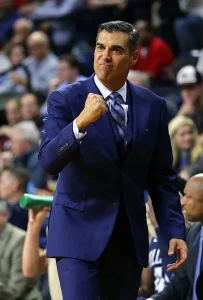
Today’s March Madness sidelines are defined by individuality and branding. Men’s coaches like Jay Wright (Villanova) embraced sharp tailoring and designer-inspired looks that conveyed confidence and leadership.
Black coaches have become increasingly visible style figures. Dawn Staley (South Carolina) blends classic blazers with bold colors, reflecting strength and intentional leadership. Penny Hardaway (Memphis) mixes traditional suits with modern cuts that reflect both legacy and personality.
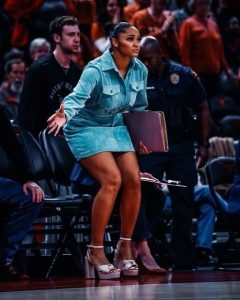
At the forefront of this revolution stands Sydney Carter, assistant coach and Director of Player Development for the University of Texas women’s basketball team. Carter has become a standout during recent March Madness tournaments for her fashion-forward courtside outfits. From coordinated sets to statement boots and bold silhouettes, her looks often go viral. Her presence highlights an era where women–especially Black women–can lead unapologetically while embracing individuality.
Fashion as Politics
Fashion on the sidelines has never been neutral. For many coaches, what they wear affects how authority is perceived and has often carried political meaning. For men, suits reinforce traditional authority. For women, clothing choices frequently invite scrutiny — too bold, too casual, too feminine, or not enough. Coaches like Sydney Carter challenge these double standards by embracing fashion as self-expression while maintaining credibility and respect.
In this way, fashion becomes a statement about who belongs in leadership spaces. What coaches wear shapes how audiences perceive power, confidence, and professionalism—especially for women and women of color.
Courtised Legacy
From conservative suits to expressive fashion statements, March Madness coaches’ style reflects the changing culture of college basketball. The sidelines have become spaces of visibility, leadership, and expression. Fashion tells a story just as powerful as the game itself.