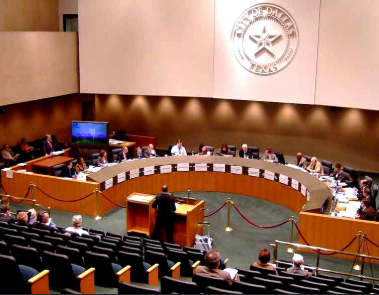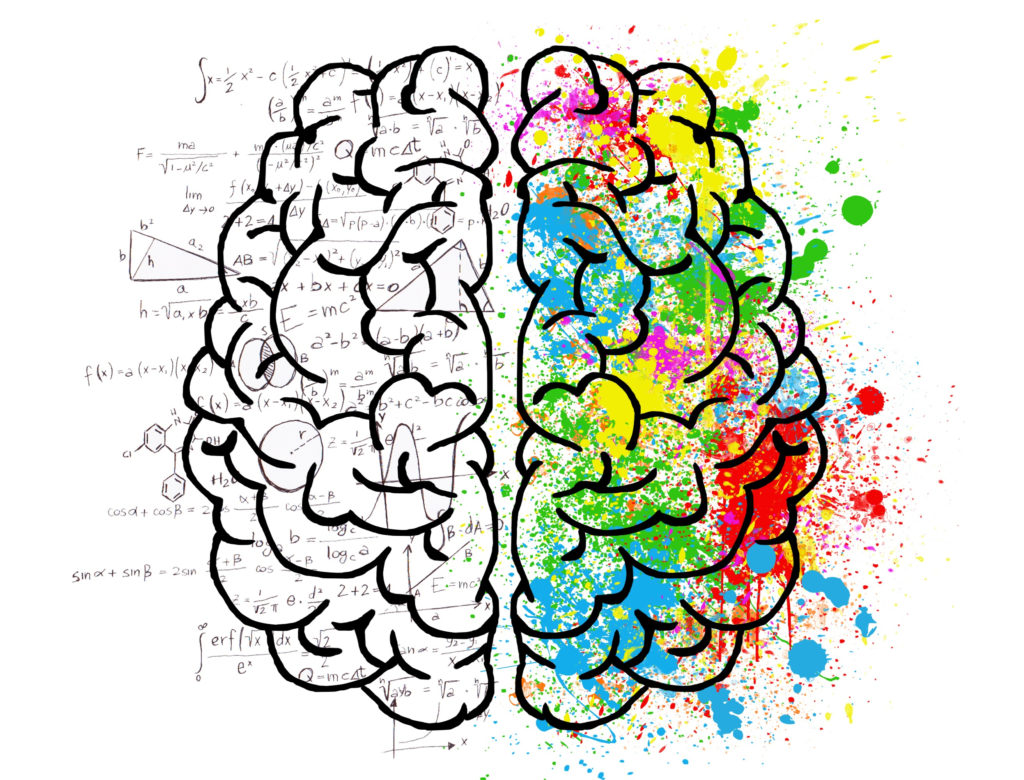
As humans, the urge and drive to understand ourselves is natural. We seek to understand the world and ourselves through the study of the arts and humanities. The arts and humanities are all about expressing oneself, learning and analyzing human culture, and through that analysis, protecting and governing it. Contrary to popular belief, the arts and humanities encompass a large range of disciplines such as psychology, political science, the visual arts, film, music, history, linguistics, and anthropology. It’s no question that the arts and humanities are essential to human existence and society as a whole. However, in a STEM (Science, Technology, Engineering, and Mathematics) focused world, the arts and humanities are often put on the sidelines and merely an afterthought of many government officials. As recently as May of 2025, The National Endowment for the Arts (NEA) saw roughly 560 grants totaling over $27 million in existing funding terminated. But why does this happen? If the arts and humanities are so significant, why do government officials disregard it so heavily? And, most importantly, what can we, the people of the United States, do about it?
The International History
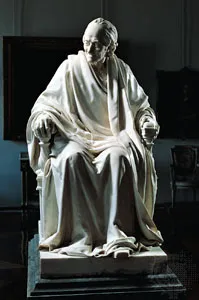
The arts and humanities have existed since the dawn of time. From cave drawings in the prehistoric era to the trivium (grammar, logic, and rhetoric) education of ancient Greece, tracing the exact start of the arts and humanities is difficult. However, it is worth noting that the arts and humanities were highly regarded and respected throughout history. It wasn’t until fairly recently that this perception began to shift. Enlightenment philosophers such as Voltaire and Jean le Rond d’Alembert used the arts specifically, such as books and plays, to develop their philosophies. Even John Locke, whose ideals inspired the American Declaration of Independence, was inspired and thoroughly educated in history and classical literature. These philosophers often used the arts to compare and identify issues in society and used the humanities (writing specifically) to critique these issues. Despite the arts and humanities’ clear serviceability, in the 20th century respect began to wane.
The 20th century was a turbulent time in history; from proxy wars, the Cold War, World War I and World War II, the wars and atrocities were seemingly endless. It’s only natural that civilians and soldiers alike used the arts to express their pain while others used the humanities to analyze what was going on in government and how to put a stop to it. In the early part of the 20th century specifically, it was the rise of fascism and totalitarianism that endangered the arts and humanities. Art from all regions of the world was destroyed, civilians and politicians who opposed the government were exiled or murdered, and books were burned in the streets. The arts and humanities were actively suppressed by the government during WWI and WWII, leading to some civilians and soldiers refusing to engage in them. Even after the world wars ended, dictators like Stalin, Mao, and Hussein actively persecuted artists and humanists who used their voice to go against the government. In totalitarian governments, the only use for the arts and humanities was propaganda, further consolidating their power. While the arts and humanities has attempted to make a steady recovery in parts of the world like Europe and Asia, they’re still considered underfunded and lack government backing.
The United States and its favorite child STEM
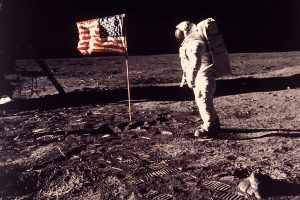
Two kids, a wife or husband, a suburban neighborhood and a white picket fence all off a single income. That was the American dream in the 1950s and 60s. The jobs usually displayed on propaganda posters for the “Man of the house” were factory and STEM based. During this time, the United States government made plans and campaigns to promote STEM-based jobs and interest to counter Soviet scientific advances. Despite the picture-perfect American dream posters, all of this was still at the height of the Cold War, where the United States and Soviet Union attempted to one-up one another any chance they saw fit. The main competitions were scientific advances, such as the moon race or the arms race. All Americans were expected to contribute to this effort, whether it was planning the next big scientific breakthrough or actually building it in a factory. It’s no surprise with this mindset capturing the hearts and minds of Americans that the arts and humanities were overlooked, even discarded in a sense. While there was significant progress such as former President Lyndon B. Johnson signing the National Foundation on the Arts and the Humanities Act of 1965, the societal stigma was still heavy. While arts and humanities scholars weren’t openly shunned in public, they were pressured to contribute elsewhere in light of the Cold War.
In the 1970s, the economy took a nosedive. Economic downturns, rising student debt, and a bigger push for vocational education hurt the arts and humanities exponentially. According to the American Academy of the Arts and Sciences, during the 1970s and 1980s, the humanities experienced a significant decline, with the number of bachelor’s degrees conferred in these fields dropping to less than half of their early 1970s peak by 1984. In addition to this, in the public eye, the perceived value of these programs dwindled to an all-time low, worse than the perception in the 1960s. STEM enrollment and vocational education became the main focus of many parents and their children. Due to the economic downturns, a livable wage was prioritized above all else, which the arts and humanities couldn’t offer fully at the time.
The Modern Day

After the sharp decline in the 1970s, the early 2000s looked promising for the arts and humanities. From 2000 to roughly 2010, the arts and humanities saw a steady increase in enrollment. With the introduction of widespread use of the internet, connecting over shared passions became easier. This connectivity gave the arts and humanities a platform to grow more than prior years. Liberal arts colleges and programs saw an increase in enrollment and graduation overall. When the recession of 2008 hit, the government was forced to reduce funding for some government committees, including the arts and humanities. While this did not affect its popularity immediately, as there was still an increase up until 2010, the trend of defunding the arts and humanities began. After 2010, while the popularity of the arts and humanities remained relatively steady, funding took a plunge. The Ford Foundation and the federal administration, the Trump Administration specifically, cut funding to the arts and humanities significantly in 2017 and 2025. The arts and humanities is currently being funded by other private organizations like the Mellon Foundation, Andy Warhol Foundation and Helen Frankenthaler Foundation, and Henry Luce Foundation. Even worse, with many people and government officials believing AI is the future of art, the arts and humanities are looking more obsolete than ever to a country that already didn’t give them respect.
 How YOU can fight back
This isn’t just to push back, it’s a fight to keep the arts and humanities alive. As an aspiring author and Legal Pad member myself, no words or art piece can express how essential the arts and humanities are to our lives. Without it, our lives are bleak, no better than a blank wall. The music you listen to, the art you admire on Pinterest, the photos you see on Instagram, the laws you abide by and uphold, all of that is the arts and humanities. We need to fight back before our society becomes lawless and void of true life. Here are ways you can fight back:
- Write Your Congress Person a Letter or Email. Whether it’s your district representative or state senator, taking the time to express your concerns is useful. Even more, the idea that Congress doesn’t read the mail or emails they’re sent is a complete myth. Your Congressperson works for you, is employed by your vote and is sent to Washington DC to represent you!
- Spread Awareness! Talk about the art and humanities on social media, discuss them with your friends, any exposure works. Chances are you already talk about the arts and humanities with your friends. Discussing your favorite music artist, talking about Texas statues or the US constitution, or even discussing the Legal Pad are ways you talk about the arts and humanities without even realizing it! What’s most important, however, is recognizing that these topics are part of, and in part funded by, the arts and humanities.
- Join or Start a club/program relating to the Arts and Humanities. The best way to bring exposure to the arts and humanities is to actively interact with it. Engaging in the arts and humanities, whether it’s at school or on your own time, is a way to connect to its purpose. Studying the facts of a case in Moot Court, using rhetoric in Debate, researching real world issues in Model UN, practicing criminal justice in action at SkillsUSA or delivering a closing argument in Mock Trial are all ways of engaging with the humanities. Reading or watching the Legal Pad, contributing to the literary magazine (sponsored by me!), reading Pride Press (sponsored by the School of Health Professions), doing photography for your social media, playing an instrument in an orchestra or band, writing poetry, or acting in a theater play are all ways of engaging with the arts. And if you’re not comfortable with doing things at Townview, I encourage you to find other outlets in your community or elsewhere in this vast world.
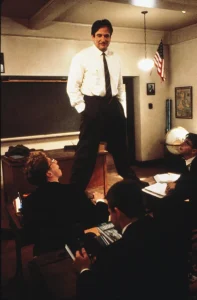
In conclusion, the arts and humanities are irreplaceable in human life and society. They should be protected at all costs and only you can step up and make the change. To leave off with a quote said by the late and great Robin Williams from the movie Dead Poets Society:
“We don’t read and write poetry because it’s cute. We read and write poetry because we are members of the human race, and the human race is filled with passion. Medicine, law, business, engineering, these are noble pursuits and necessary to sustain life. But poetry, beauty, romance, love, these are what we stay alive for.”
Sources and Additional Reading:
https://www.theatlantic.com/magazine/2026/03/mellon-foundation-humanities-research-funding/685733/
https://www.amacad.org/humanities-indicators/higher-education/bachelors-degrees-humanities
https://www.theartnewspaper.com/2025/05/19/foundations-step-up-support-arts-organisations-trump-cuts
https://jgu.edu.in/blog/2024/02/19/difference-between-arts-and-humanities/
https://www.arts.gov/sites/default/files/10.pdf