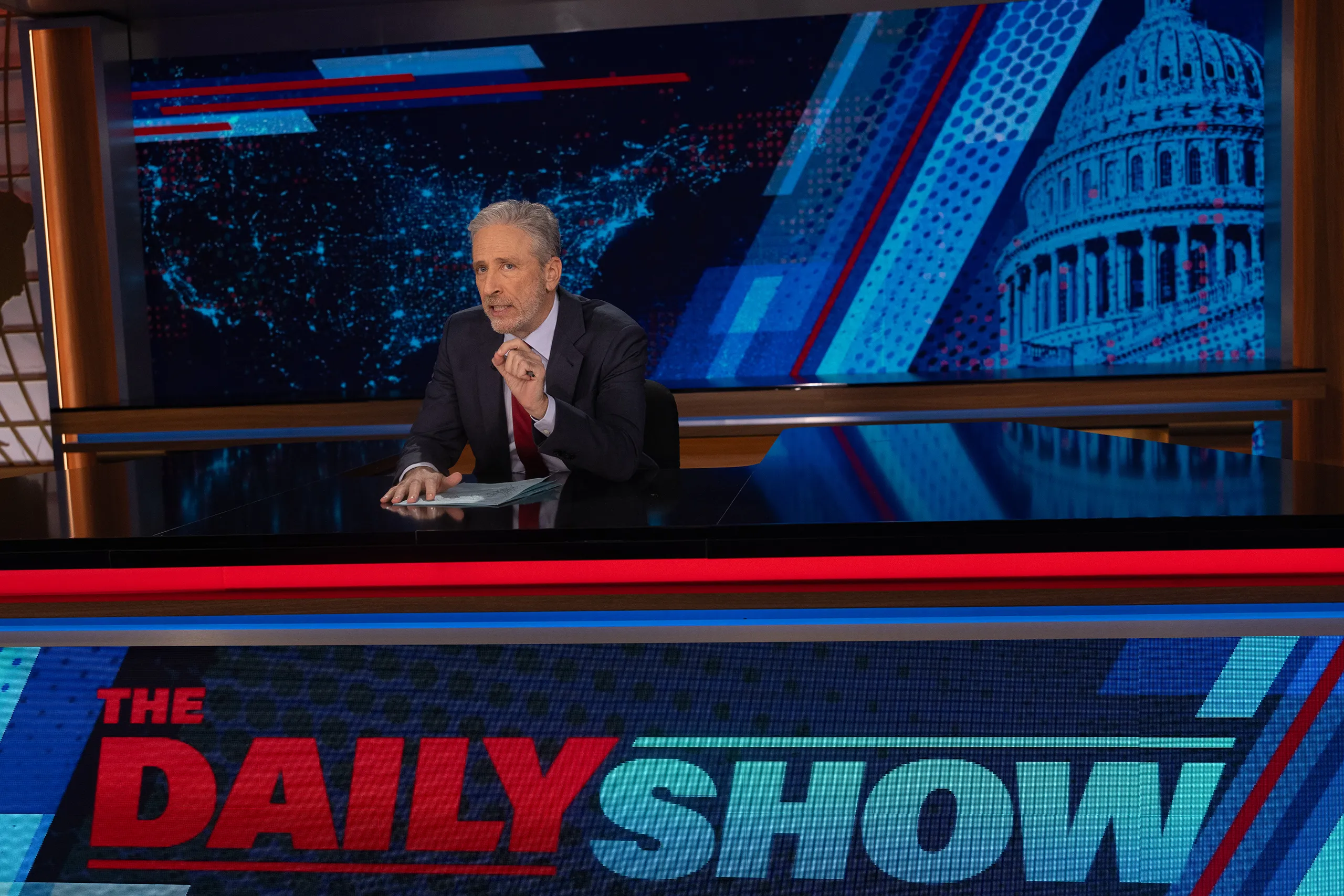
Jon Stewart’s legacy is completely intertwined with the life force of political satire; over the course of his career, he has defined the conversation over the absurdity of politics, serving as a logical, perpetually-exasperated observer amidst a hurricane of bad news. Best known as the host of The Daily Show from 1999 to 2015, and now on Mondays since 2024, Stewart transformed what was once a light parody of news programming into a cultural force with a serious stake in politics for an entire generation. His years of work demonstrated that satire was not just a form of comedy, but a pathway to challenge power in a way traditional media often failed to do so.
Stewart’s Method
Stewart’s approach to satire was deceptively simple. Rather than inventing elaborate caricatures, he relied heavily on politicians’ and media figures’ own words. By placing news clips side by side, highlighting contradictions, and stripping away deceptive framing from the speakers, he let hypocrisy speak for itself. The humor came not from exaggeration but from accuracy. This method gave his satire a sense of credibility that resonated deeply with viewers who were increasingly skeptical of political messaging and media narratives.
Stewart vs. The Media
What set Stewart apart from earlier satirists was his relationship to journalism. He often maintained that the Daily Show was “fake news” and should not be taken seriously, yet the show consistently broke down complex issues and revealed unsavory truths more clearly than any cable news outlet. Stewart’s criticism of media culture—particularly its obsession with conflict, ratings, and false balance—became a central theme of his work. He argued that treating every issue as a debate between two equally valid sides often distorted reality and undermined public understanding. His satire targeted not only politicians, but also the systems that amplified misinformation and rewarded outrage
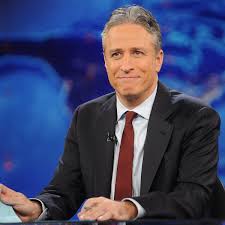
Moreover, emotion played a key role in Stewart’s effectiveness. Unlike satirists who maintained ironic distance, Stewart often allowed genuine anger, disbelief, or moral frustration to show. He would contort his expression in confusion, cradle his face in his hands, and curse outrageously. His visible exasperation signaled to audiences that the stakes were real, even if the delivery was humorous. This emotional transparency helped build trust with viewers, especially younger audiences who felt alienated by the supposed neutrality of mainstream news. For many, Stewart became a gateway to political awareness, shaping how they learned to question authority and evaluate sources.
Beyond the Daily Show

Stewart’s influence extended far beyond television. His 2010 “Rally to Restore Sanity and/or Fear” drew tens of thousands to the National Mall, blending satire with civic participation. Later, after stepping away from The Daily Show, he emerged as a powerful advocate for 9/11 first responders, using his public credibility to push for legislative action. These moments highlighted an important dimension of Stewart’s satire: while he rejected the label of political leader, he did not shy away from moral responsibility when real people were affected.
Against Cynicism
Critics have sometimes argued that political satire fosters cynicism or disengagement. Stewart himself addressed this concern, highlighting the passive nature of cynicism in contrast to skepticism, which demands accountability. His satire encouraged audiences to care more, not less, by insisting that political systems could and should be better. Laughter, in this context, became a tool for processing frustration rather than avoiding it.
Jon Stewart’s legacy illustrates the enduring power of political satire in a democratic society. By combining humor, critical thinking, and moral clarity, he showed that comedy could challenge authority without becoming propaganda and engage citizens without pretending to offer easy answers. In an era of information overload and declining trust, Stewart proved that sometimes the most effective way to tell the truth is to make people laugh, then leave them thinking long after the joke has ended.