

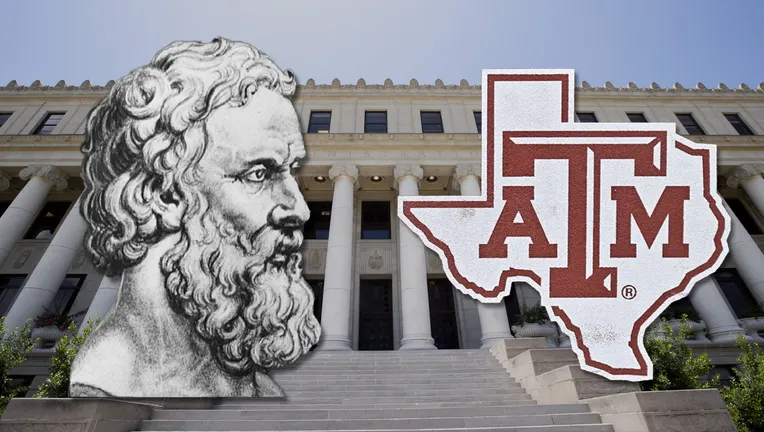
“The power to learn is present in everyone’s soul, ” Plato writes in The Republic. For many years, education has relied on philosophy and classical texts to encourage critical thinking and inquiry. Particularly in philosophy courses that examine enduring questions about human nature and society.
In Texas, debates over curriculum oversight have intensified after the implementation of the Texas A&M University System’s Policy 08.01, which took effect in December 2025, requiring all course syllabi to be reviewed and approved by system administrators. The policy was adopted in advance following the passage of Senate Bill 37 in June last year, which expanded the authority of the THECB to review course content at public universities.
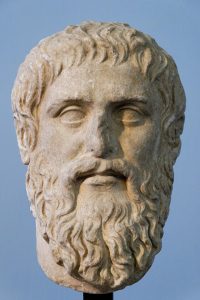
According to faculty statements, this review process resulted in Plato’s Symposium being removed from Dr. Martin Peterson’s introductory philosophy course due to portions of the text that discuss gender and race. These topics fall under the university’s Policy 08.01 restrictions on race, gender, and sexual orientation. The decision sparked responses from students and faculty who questioned how such policies may affect academic freedom and the teaching of classical texts in public higher education.
Dr. Martin Peterson holds a PhD in philosophy from the KTH Royal Institute of Technology, Sweden, and has taught at A&M University since 2014. He now faces a threat to his livelihood for including an excerpt from Plato’s Symposium in his philosophy class curriculum. In his Symposium, Plato explores the nature of love (Eros) framed by a discussion held at a banquet hosted by his character Agathon. One of his characters, Aristophanes, offers an explanation behind why humans search for love, or, as he puts it, their other half.
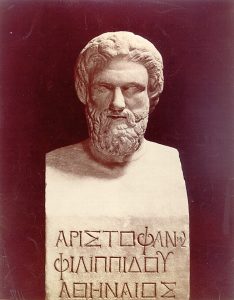
Aristophanes argues that, “The sexes were not two as they are now, but originally three in number; there was man, woman, and the union of the two.” He names his third entity as androgynous, neither man nor woman. He mourns how the term “once referenced this creature’s double nature…but is now lost, and the word ‘androgynous’ is only preserved as a term of reproach.” He goes on to depict that humans only took the form of this androgynous being, but man and woman were split from its being, destined forever to search for their other half and be once more whole.
Plato’s description of androgyny draws parallels to modern-day discussions surrounding queer identity. His works draw attention to how queerness has been a long-circulating topic of interest and not a recent leftist invention, as it is often posed in conservative media. The censorship of historic texts such as Plato’s work undermines the legitimacy and trust many audiences have in LGBTQ+ speakers today. Although this might not be the most favored or popular viewpoint among Texan residents, A&M is a public state school, not a private conservative entity. Public institutions should have the freedom to teach from multiple perspectives rather than censor one point of view to validate another.
Plato’s writings are certainly debated, which Dr. Martin Peterson recognizes, stating in an interview that indeed, “[Plato] does not agree with the narrative that there are two biological sexes and everyone should be heterosexual, so it is controversial, but that is the very point of including him in the syllabus.” Dr. Peterson highlights how essential it is to introduce students to an alternate and possibly uncomfortable perspective, especially living in a Republican state, which historically advocates for politically conservative ideals.

He frowns on the threat to his freedom of speech and criticizes how the university framed their undeniable censorship as “not so bad” because he was still permitted to “talk about some of Plato’s works.” He calls out the absurdity of the narrative, stressing, “C’mon, this is a philosophy department. Philosophers should, of course, be allowed to read and discuss everything that Plato wrote.” In an attempt to emphasize the importance of open discussion, Dr. Peterson has replaced the banned modules with lectures on free speech and academic freedom. Additionally, for their reading work, he has assigned his students an article from the New York Times that covers this very case. His newly altered curriculum is now awaiting approval.
The restriction of Symposium at Texas A&M highlights how curriculum oversight can shape classroom instruction. Limiting access to such texts may narrow academic exploration. This raises questions about the future of education, including curriculum oversight influence and which ideas are considered acceptable. It underscores the importance of remaining informed and literate about educational policies that shape learning.
https://www.gutenberg.org/cache/epub/1600/pg1600-images.html
https://www.instagram.com/reel/DTSzskoEuMS/?igsh=emtxc2VvNWZuNm9r
https://www.nytimes.com/2026/01/07/us/tamu-plato-race-gender.html















Lucy • Feb 22, 2026 at 5:07 pm
Beautifully written!! I admire y’all’s newspaper so much!