Humans repress painful memories; we often see it as the only way to move forward. Trauma is stuffed into a dusty corner, things we regret saying are forgotten, friends become old friends, and memories turn dim. History has a similar habit of forgetting the past. One finds that a particular massacre is difficult to find in textbooks, riots are relegated to mentions in century-old newspaper clippings, medical atrocities go unacknowledged by entire nations.
One instance of forgotten history began in 1916, when Los Angeles experienced a typhus outbreak. 26 people contracted the disease and five died from it, all of the deceased being Mexican. Because of the outbreak, health officials began to believe that Mexicans were inherently disease-carriers, and they created policies to not only address this health scare, but to also ensure the public would attach Mexican identity to uncleanliness.
What Were the Gasoline Baths at the Border?
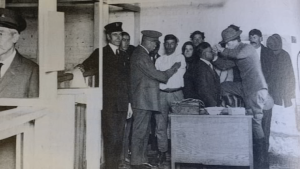
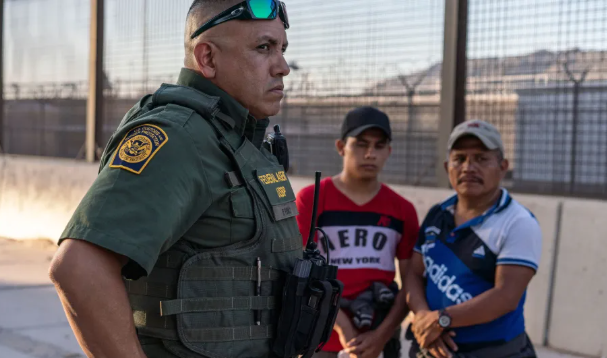
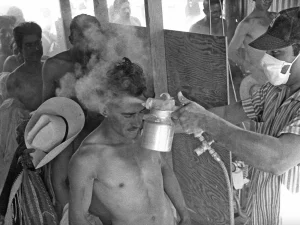 Beginning in 1917, Mexicans crossing the United States-Mexico border were forced to strip naked, endure a physical examination, and be sprayed with a chemical solution that was meant to kill lice. These chemicals, like gasoline, pesticides, insecticides, and hydrocyanic acid, were often flammable, toxic, and deadly. If a man was found to have lice during a physical examination, he would have his head shaven. Women would have their hair soaked in a mixture of vinegar and kerosene, which is a highly-flammable chemical. Officials ignored the health risks that constant exposure to these chemicals posed to those crossing the border, especially the domestic workers who underwent the process each day. For instance, according to the National Library of Medicine, kerosene poisoning could lead to “[i]nfection, shock, and death […], even several months after the poison has been swallowed. Scars may form in these tissues leading to long-term problems with breathing, swallowing and digestion.”
The dehumanization did not end with the policies enacted, though. Allegedly, workers at the delousing facilities photographed female Mexican immigrants while they were nude and posted these photos in local bars.
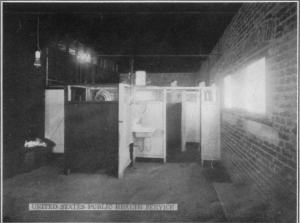
Provided by: https://www.jstor.org/stable/4574464
A Stand Against Dehumanization
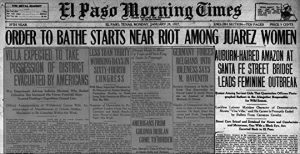
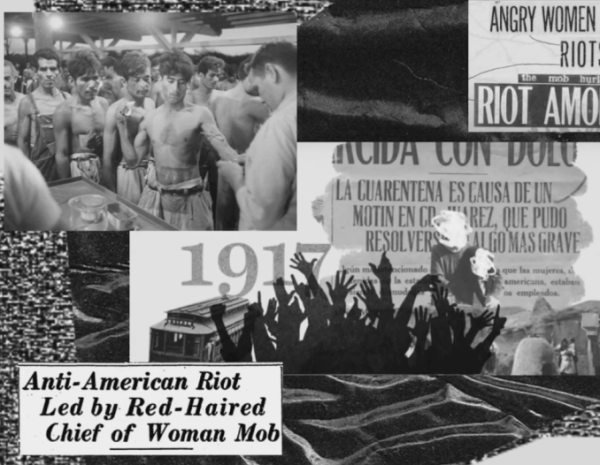
In 1917, a 17-year-old Mexican worker named Carmelita Torres was asked to step off her trolley to be deloused. Having heard stories of women being photographed naked and knowing the risks of exposure to the flammable chemicals, she refused and disembarked the trolley to yell at authorities. Soon, hundreds of predominantly-female domestic workers gathered to protest the inhumane policies at the delousing facilities. However, within three days, the chaos subsided and Torres was taken into custody. To this day, it is unknown what happened to the girl who incited what became known as the Bath House Riots. Despite her act of courage, the delousings at the U.S.-Mexico border would continue until the late 1950s, when officials finally recognized the dangers of continual exposure to toxic chemicals on human beings, no matter their race.
A Dark Legacy
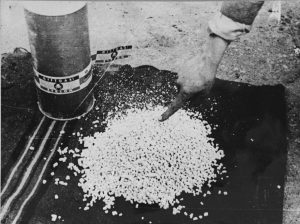
In historian David Dorado Romo’s book Ringside Seat to a Revolution, Romo includes his findings that records in the National Archives show that officials at the Santa Fe Bridge deloused Mexicans’ clothes with a chemical known as Zyklon B. According to Romo, a 1938 German article published in a scientific journal praised the methods used at the Santa Fe Bridge for delousing Mexican immigrants using Zyklon B. During World War II, the chemical was adopted as a tool for delousing Jewish prisoners at extermination camps. Once the Final Solution was enacted, Zyklon B pellets would be used in Nazi gas chambers to exterminate these Jewish prisoners.
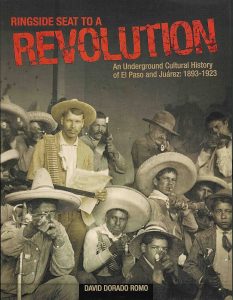
Ringside Seat to a Revolution also features personal stories from Mexicans who endured the gasoline baths at the border. The author’s own relative was a survivor of the baths. Romo writes, “My great-aunt, who worked as a maid in El Paso during the revolution, told us she felt humiliated for being treated as a ‘dirty Mexican.’ She related how on one occasion the U.S. customs officials put her clothes and shoes through a large secadora (dryer) and her shoes melted.”
Uncovering Forgotten History
In 2019, Vox released a YouTube video titled The dark history of “gasoline baths” at the border. The video, which has since garnered almost 4 million views, traces the beginning of the baths and the dehumanizing practices used against Mexican immigrants as they entered the United States. In the comments section, people attest to never having learned about the gasoline baths in school—even those who live in El Paso, where the gasoline baths began. One commenter writes that their grandparents and great-grandparents were migrant workers, and that their family is now “riddled with cancer.” Vox brought this disturbing era in American history to light, allowing a new generation to hopefully learn from the horrific past that has been buried over the years.
Above all, any person who learns about the gasoline baths at the border is left wondering, “how was this allowed to happen?” We like to believe that humans have made boundless progress over decades, or in this case, a century. A perceived distance forms between ourselves and the unbelievable prejudice that is indelibly attached to history. What we forget is that heinous acts like the gasoline baths can be found at every moment in time. There are countless atrocities that have been forgotten, relegated to corners, neglected by historians—we just haven’t found them yet. During a political climate that is smeared with racism, misogyny, homophobia, transphobia, and every other prejudice that humans have created, it is of utmost importance to remember the past, no matter how painful it may be. As the generation that will soon carry the torch of defining the present moment, we must believe in our ability to change for the better. If not, history will pass us by before we know it, and the terrible acts being committed across the world will once again be relegated to the vague, distant past.