The Milano Cortina 2026 Olympic Games began on February 6th, presenting eight different sports with 15 disciplines and approximately 2,500 athletes. Some hope this is the grand finale of their careers, the chance to close with a golden medal; others are there for the experience and honor of getting to compete in these historical games. Today, we bring you a small guide to what to expect at these Olympic Games and the ones you should be on the lookout for.
Alpine skiing

From agility to speed, Alpine skiing displays it all. Although one of the lesser-known events at the Winter Olympics, over 2.6 billion sports fans tune into the rounds (as recorded by the sports examiner). The rounds are usually broken into 2 runs and include a variety of disciplines. Disciplines themselves are separated into two categories: Speed and Technical. Speed consists of Downhill and Super-G events. During Downhill, the athletes are given a straight shot downhill and must maximize their speed to reach the bottom of the slope first. Super-G, while similarly focused on maximizing speed, also mixes in the technical aspect. Essentially, the goal is to turn as gracefully as possible around the gates (the makers) while increasing speed. The technician part of Alpine skiing is more about precision, making sure athletes have a clear, seamless turnaround at the gates and stay on the piste. Technical consists of slalom and giant slalom. Slalom has the most gates out of any event and the tightest turns, allowing no room for error. Giant slalom sets the gates further apart, creating wider, powerful turns. Most athletes would describe Alpine skiing as elegant, like figure skating, but with the riskiness and demand of regular skiing. Austria, Switzerland, and Italy dominate in Alpine skiing, often bringing home gold, silver, and/or bronze.
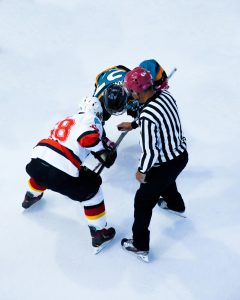
Ice Hockey
Thanks to a certain show and book, more eyes are on ice hockey than ever before. However, ice hockey has always been madly popular, especially in Canada, where it’s the national winter sport. Ice hockey works like this: the ice is split up into three sections—defensive, neutral, and offensive. In the defensive zone, you protect the net and prevent the opposing side from scoring goals. For the neutral zone, quick passes, fast skating, and well-versed strategies are what get an athlete over to the opposite side. Finally, in the offensive zone, athletes set up plays and go all in for the goal. Hockey athletes are usually set up in the formation of three forwards, two defensemen, and one goaltender. Hockey games usually consist of three twenty-minute periods, but if teams are tied, overtime kicks in. If no one scores, then a shootout with the goals determines the winner. In the gold medal games specifically, teams play three-on-three overtime until someone scores. Ice hockey is extremely competitive, especially during the Olympics. Countries like Canada, Finland, Czechia, Sweden, and the United States consistently sweep the floor, ranking in the top 5 in past Olympic years.
Figure skating:
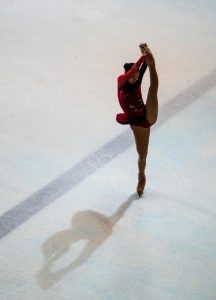
This year, figure skating is one of the most widely anticipated sports, beginning February 6-19. The first disciplines on the schedule are the team events. All figure skating team events consist of five disciplines from ten different nations. Each country presents entries for a total of eight segments, and based on this, it is determined which top five teams advance. After the teams finish skating four free skate and dance performances, the scores are added up to determine the medal winners. The next discipline consists of ice dance, men’s and women’s singles, and pair skating. Icedance is focused on footwork, rhythm, and music interpretation; single programs for both men and women showcase individual skaters performing jumps, spins, and step sequences with choreographies consisting of both short and free programs. Lastly, pair skating consists of a man and a woman doing elements like lifts, twists, jumps, and step sequences accompanied by choreographies.

Now, each category has its favorite to win. For the men’s singles, being the current United States and world champion, Ilia Malinin is the favorite to win gold due to his fascinating technical skills and his insane mastery of quad jumps, which include four revolutions in the air; in his fan base, he is often referred to as the “Quad God.” In women’s figure skating, Alysa Liu, Amber Glenn, and Isabeau Levito are the favorites to win due to their artistry and insane technical skill. However, in ice dance, senior veterans like Madison Chock and Evan Bates are carrying the U.S. team into their fourth Olympic Games. Lastly, Ellie Kim and Danny O’Shea hold multiple recognitions because of their artistry and athleticism, making them favored for Olympic gold.
Snowboarding
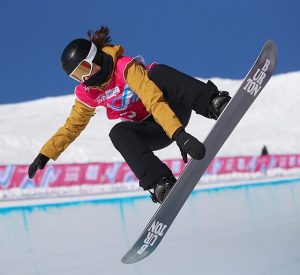
In the high peaks of Valtellina, Italy, the snowboarding events will be held from February 5th to the 18th. Often seen as an adrenaline-fueled activity, it consists of five disciplines: halfpipe, snowboard slopestyle, big air, snowboard cross, and parallel giant slalom. Each discipline navigates its own tricks, obstacles, jumps, and its own spark of creativity. In halfpipe, Scotty James (Australia) represents what it is to have the technical skill and precision needed for demanding aerial maneuvers and tricks. Slopestyle includes a course of obstacles that show tricks scored on creativity. Zoi Sadowski-Synnott is the representative of New Zealand and has won three Olympic medals and is the reigning slopestyle world champion; she is often praised for her innovative techniques. The big air discipline consists of a single trick performed after being catapulted into a massive jump. Hiroto Ogiwara from Japan is a symbol of innovation and excellence due to his creativity when performing the 2340 tricks. Now, snowboard cross consists of a head-to-head race down a course of obstacles and jumps where four competitors race. Parallel giant slalom includes riders who race down parallel tracks, having to go around gates; the overall objective is to end up finishing first.
Overall, the Milano Cortina 2026 Winter Olympic Games have something for everyone. Whether you prefer the grace and beauty of figure skating or the invigorating thrill of snowboarding, the Winter Olympics cater to every taste. The Winter Olympics are free to watch on YouTube or on your local news channel. Additionally, the Milano Cortina 2026 Winter Olympic Games and the regular Olympic websites will have the games live for free. Schedules for the events can also be found on said sites. Sit back, relax, and enjoy!