“It is the policy of the State of Texas to protect expressive rights guaranteed by the Constitution of the United States. Consistent with this policy, the University of North Texas recognizes that freedom of expression is a fundamental right of all persons and that as a public institution of higher education it has a responsibility to operate and maintain an effective and efficient educational and work environment, including regulating the time, place, and manner of expressive activities in its facilities as well as on its grounds. In keeping with this responsibility, students, faculty, staff, and guests are free to exercise the right of artistic expression in UNT facilities in a constitutionally protected manner subject only to the content and viewpoint-neutral regulations necessary to fulfill the university’s mission and its obligation to preserve the rights of others, coordinate multiple uses of limited space, maintain campus facilities, and assure financial accountability for any damage caused to the facilities.”
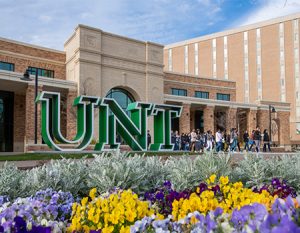
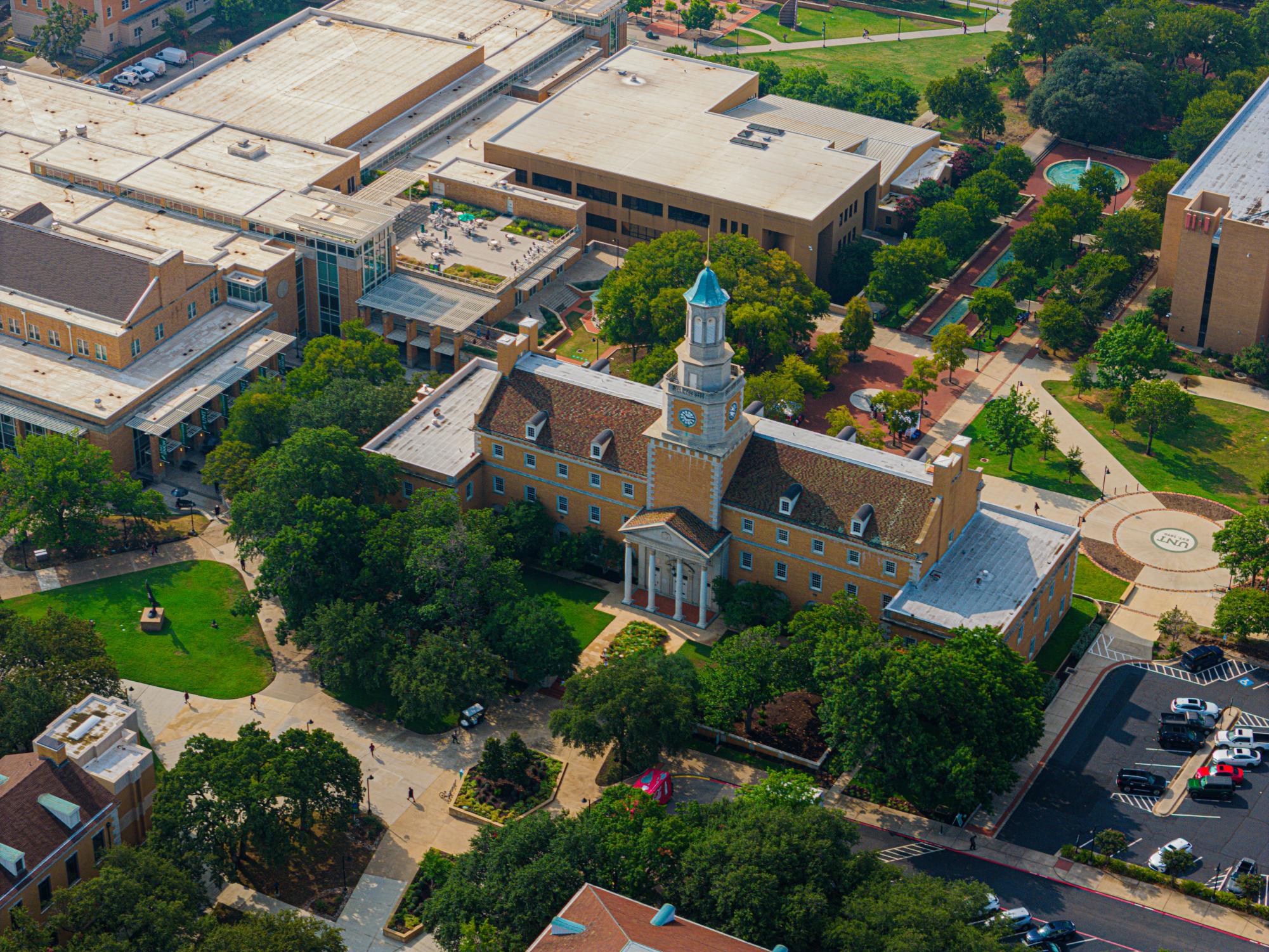
This is policy number 11.012 of the University of North Texas, commonly referred to as UNT, about art exhibited on campus. With one of the largest art programs in Texas, students are entitled to creative freedom and artistic expression. On February 11th, 2026, artist Victor Quiñonez was emailed by UNT administrators, being told that his exhibition had been canceled and the loans from Boston University to fund it as well. So, what’s really going on? And, more pressingly, what do the students think about this?
Exhibition and Identity
To understand the exhibit in totality, we need to look at the artist. Known professionally as Marka27, Victor Quiñonez identifies as Mexican-American. Born in Mexico, this family moved to the United States when he was only 4 years old. Growing up in East Dallas, Quiñonez was exposed to both Mexican and American culture, creating the foundation his later artworks would use. The exhibition itself, titled “Ni de Aquí Ni de Allá,” translating to “Neither from here nor there,” explores the dual responsibility of being connected to one’s culture while still being brought up in the United States. From Quiñonez in an interview with CBS News:
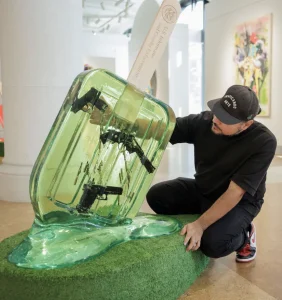
“The exhibition deals with dual identity. It really goes deep into what it means to grow up in the US but also love your own identity and be connected to your heritage.”
The exhibit itself was set to be released on February 3rd and be showcased until May 1st. However, things began to get concerning when communication from UNT abruptly stopped. UNT stopped responding to emails and texts from Quiñonez. Then, UNT students began to rapidly text and email Quiñonez, asking what happened to his exhibit. From Quinnez in his CBS interview:
“It wasn’t until February 11th that UNT students started reaching out to me through social media, through DMs, asking me, ‘What’s going on with your exhibition? Is your exhibition being postponed? We see that it’s been covered. All the blinds are down, the front of the windows is covered with brown paper, and we can no longer look inside.’”
The Cancellation
Later that night on February 11th at 7:30pm, Quiñonez’s suspicions had been confirmed; his exhibit had been canceled. UNT in the following days sent out no explanation. Both students and faculty members are asking for an explanation. In a letter written to UNT’s president, they wrote: “The removal of legally protected artistic expression from a university gallery contradicts the institution’s own commitments to academic freedom.” On February 19th, students of the art department walked out of their classrooms in protest of the cancellation. The art students walked several miles around campus, holding up signs and drawing with chalk on the sidewalk and walls. As of March, UNT has still not sent out any explanation and has refused to send comments to news agencies. While Quiñonez does acknowledge ICE was referenced in his piece, he argues that the exhibit is more about cultural identity as opposed to ICE.
“The exhibition is absolutely not just focused on ICE. It’s one element of the entire exhibition. It’s more focused on dual identity. It’s absolutely more focused on celebrating our culture, really bringing the humanity to the people that are being villainized right now.” -Quiñonez to CBS
Student Voices
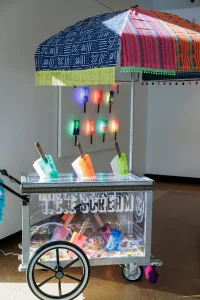
Thanks to both of my older sisters going to UNT, I was able to get an inside scoop into the opinion of a student. I interviewed Ruby Iraheta, a sophomore at UNT Denton, and this is what she had to say:
Q. What type of art do you do at UNT?
A.“Drawing and Painting major
Q. What are your overall thoughts on the cancellation?
A. “The current state of Cancellation of Victor Quiñónez Exhibited featured in UNT was impactful in how the school responded towards the exhibit. By limiting the artist’s rights to speech through art, which his art is significant to current issues with ICE, and displaying the piece in the exhibit. The way the school reacted towards taking down/covering the exhibit without notifying the artist, which is disappointing, the overall situation is scary in that they may change in rules for artworks or exhibits in the future for CVAD students.”
Q. Do you believe UNT has ever censored or impacted your artistic expression?
A. “At the current moment UNT hasn’t censored or impacted my artistic expression, but fear the idea that it may happen. Although this isn’t the first time censorship has happened at UNT. This censorship has happened before Victor’s exhibit. The previous exhibition was held in UNT Union 2025; an artist had an artwork on the current situation in Gaza. And the school has asked the student to take the piece down. The exhibit, at the time, placed barriers in the surrounding exhibit area in the Union due to the censorship of the many artworks and thoughts on the art piece of Gaza. They changed certain rules for exhibits in the Union, and to this day still use barriers for the exhibit area. Which, sadly, is scary—the thought of censorship for CVAD at the current moment/situation. My current professor is the museum director, whom she can’t say much about, but there is a lawsuit pending. She has mentioned she is trying her best to make sure nothing major impacts the exhibits and is not letting them restrict student rights, as well as no censorship of artworks. At this moment, there has been a protest walk due to the exhibit cancellation, and there are signs, notes, and many flowers in front of the exhibit location that students have created. Displaying how they genuinely feel about the situation.
Ultimately, this isn’t just the cancellation of an exhibit but a statement, whether intended or not. With such an already hostile political climate, administrative decisions set the precedent for other artists. UNT on its official site itself promises freedom of speech and the right to artistic expression so long as it’s constitutionally protected. Victor Quiñonez’s exhibit was one of many exhibits that have been canceled by UNT in the past 2 years. So students, faculty, and parents are all left with the same question: why?
Sources:
https://www.cbsnews.com/texas/news/unt-removes-marka27-exhibit-without-explanation/\