“Imitation is the sincerest form of flattery.” Or at least, that’s how the saying goes. Imitation can come in many forms and cultural imitation is one of such. Borrowing elements from another culture can often be a sign that traditions, foods, and practices resonate far beyond the communities that created them. But when these communities aren’t given credit and are detached from their adopted culture, imitation steers onto the path of appropriation. When cultural practices are stripped of their origins, renamed, and repackaged as trends, the line between appreciation and appropriation becomes more noticeable. This is a pattern especially notable in Asian cultures adopted in Western societies through primarily fashion and food.
Credit Where Credit is Due

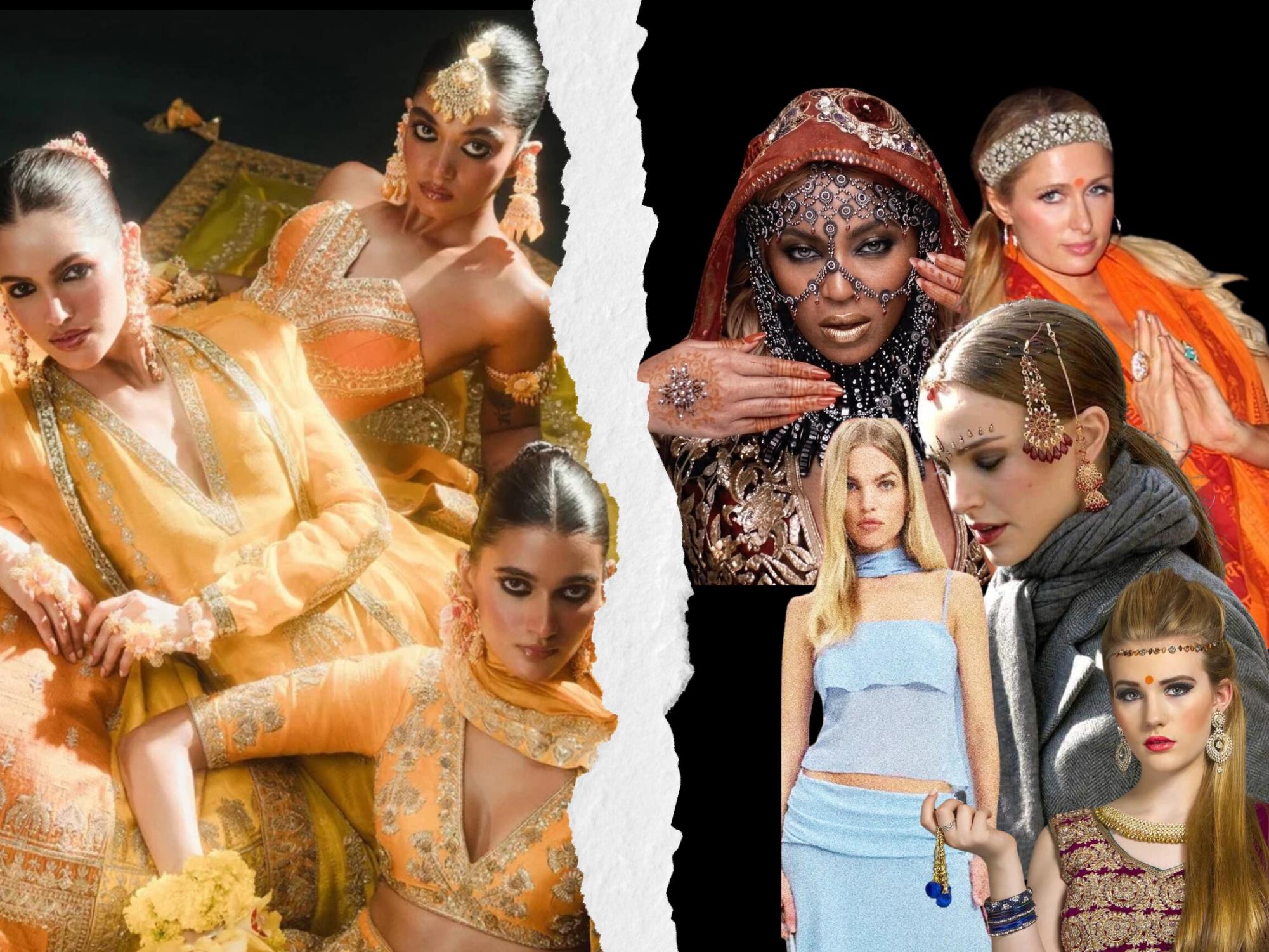
Many commercial and high end fashion brands including Hollister, Oh Polly, and Cartier have utilized South Asian staples in their designs without crediting its original source. A prime example of this is the “Scandinavian Scarf” style that went viral on TikTok, as viewers praised Oh Polly for its innovation in accompanying its dresses with a complementary neck shawl. This style went viral across social media when a creator labeled it as “Scandinavian.” This sparked debate throughout South Asian communities as this style of dress certainly wasn’t new to them.
In India and other South Asian countries these shawls commonly known as chunnis or dupattas have been adorned by women for centuries. These shawls weren’t simply used as an accessory but a widely recognized part of Hindu worship as, to this day across the world, women use these to cover their heads in a temple to exemplify modesty and respect.
Disregarding History
This longstanding cultural tradition being labeled as a “Scandinavian Scarf” completely misrepresented where the style originated from and discarded South Asians who coined this style years ago. After a classic South Indian style was labeled as originating from Europe, suddenly, everyone wanted one in their closet. It became increasingly popular as consumers praised the creativity behind a design that was taken from an original culture.
Rebranding Existing Flavors
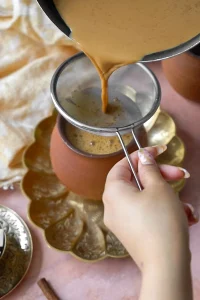
This phenomenon is not only limited to fashion but is frequently observed in the food industry as well. Asian flavors like chai, turmeric, ube, and matcha have been globalized at an increasing rate. While everyone is certainly welcome to try new flavors, it is the lack of recognition and authenticity in the practice of creating and distributing these drinks that many communities have issues with.
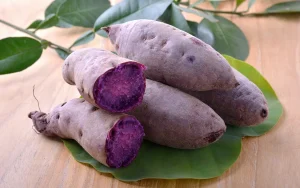
Drinks such as chai and matcha which traditionally take time to prepare slowly, in order to extract all their flavors, have been diluted to factory produced low quality alternatives. These popularize a low quality version of those products and drive up prices of ingredients at the same time. Sometimes these drinks’ heritage isn’t recognized in their product descriptions at cafes such as in the case of ube, which is a traditional Filipino flavor derived from a purple yam.
Ignorance Instead of Inquisitivity
The American multinational coffee company, Starbucks recently launched ube as a new addition to their menu and it went viral throughout social media. One specific video of a consumer trying the drink and mistakenly referring to it as “oob” became the topic of humor among many but primarily disappointment through Asian communities. Many were disappointed to see the ignorance of consumers trying a widely appreciated traditional flavor, who didn’t know anything of its origins, let alone how to pronounce its name correctly.
What’s Socially Acceptable…and What’s Not
Although many individuals are delighted to see that their culture is spreading to new people and places, they harbor disappointment because the popularizing trends root from cultural minorities that have been historically discriminated against and othered because of their differences.
When moving to America many Asians and Asian American children were made to feel different because of the food they ate at school or work. For many South Asians it was unsanitary or messy to eat in a traditional Indian way with your hands, and food was frowned upon for its strong scent of spices or pungent fermented East Asian dishes like kimchi.

They even thought better of wearing cultural clothing outside fearing that it would attract unwanted attention or looks. Their styles weren’t deemed as cool or socially acceptable; they were just different and sometimes weird.
Cool Because…Who Said So?
The food and clothing represented by Asians in America seen as embarrassing evolved to be the pinnacle of trendiness when deemed so by European American creators and brands. To see your insecurity be transformed into the desirable standard because it was worn by someone of a lighter skin is an experience many Asians can relate to. Things that were frowned upon and the things that they were othered for were suddenly deemed cool just because they fit eurocentric ideals of beauty.

Picture provided by BuzzFeed
Even in Asian countries like South Korea and India, eurocentric standards have dominated the beauty industry creating obsessive attachment towards having fair skin, perpetuating negative body images amongst women and young girls from a very early age. These communities are constantly made to feel that they don’t belong and that their contribution isn’t important until someone white says it’s cool. This is the internal struggle that communities feel when seeing their beloved culture being spread and adored while so much of themselves have been discarded and ignored.
Appreciating, not Appropriating
Now this doesn’t mean that spread cannot take place. Syncretism and cultural learning is one of the most beautiful things globalizing society has given us. But this sharing of culture should come from a place of curiosity and appreciation for other cultures. It is about education about what or why you’re wearing or drinking something. It’s about intentionality, its origin and cultural significance. You can both enjoy the culture and the people that created it. The difference between appreciation and appropriation ultimately comes down to recognition. Are we engaging with the culture behind these practices, or are we simply consuming the most convenient version of it?
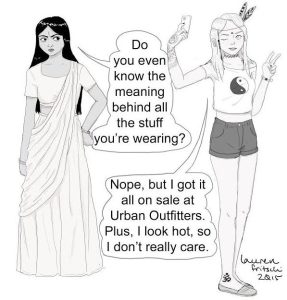
Image by Ke Kgoshidagi