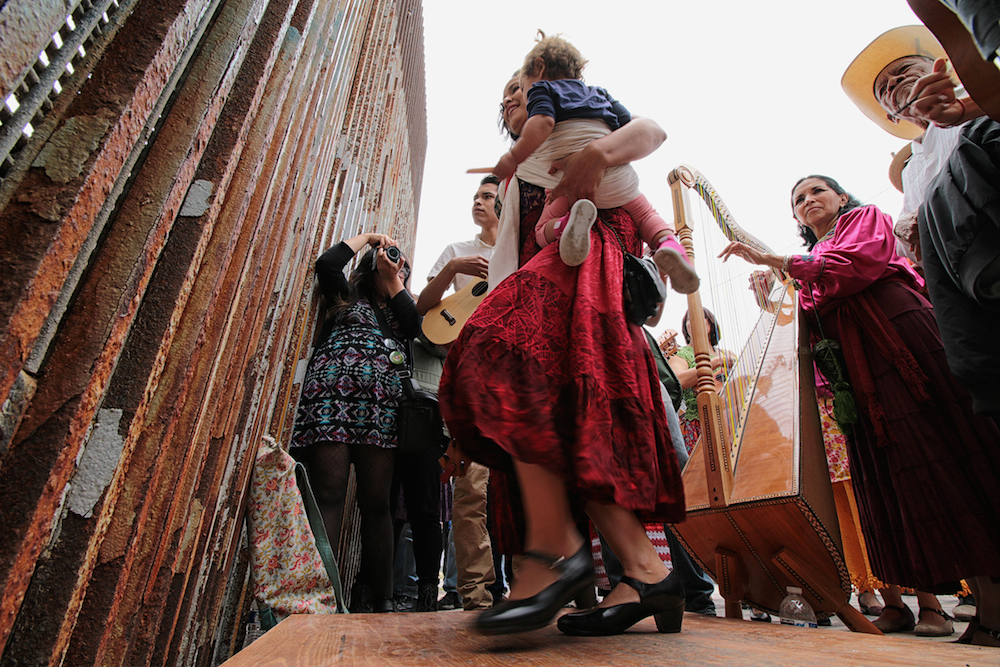
In the 1960s, Mexico worked to change its international image through the use of traditional and representative music; the people of their state leaving for romanticized reasons longed to share their heritage. However, when these immigrants came to the land of the American Dream, they were met with newfound discrimination.
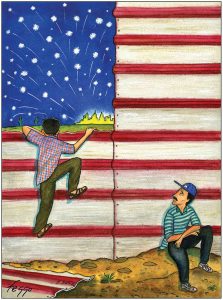
They used music to express their status, and in doing this, not only was the image of Mexico improved–through songs filled with nostalgic and idealized lyrics of their birthplace–it consequently reinforced the collective memory of those immigrating.
Music, in this way, can be used to improve memory. Memory is often defined within two categories: collective and individual. Collective memory refers to the shared experiences of a group while individual memory refers to one’s experiences. The Mexico-United States border region further allows for music to be used as a propeller of memory for immigrants in all forms.
Cultural Memory
In Southern California, Mexican Americans used music in productions to preserve and share Mexican perspectives of various historic events. Not only did specific genres like corridos contribute to maintaining cultural memory, the plays themselves gave voice to an often ignored or mistreated minority group. Through doing so, historical and political events were addressed, such as in The Ramona Pageant and The Mexican Players, which maintained Mexican traditions and perspectives.
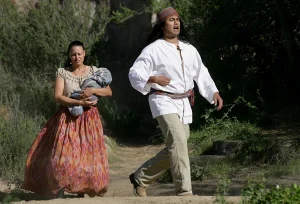
Picture by The Press-Enterprise
In Texas, Mexican fans of Selena play a role of consistency in keeping her memory alive through their continuous act of cultural memory. Similar to the after-lives of famous artists such as Elvis Presley, “selenidad” often encapsulates a feeling of long term and collective mourning that preserves the identity of the musician. This shows that not only does music allow the listeners to establish their memory, but also allows the engagers and performers to do so. In turn, this represents the large number of Latinos in the U.S. that long for a more promising future.
Identity Establishment
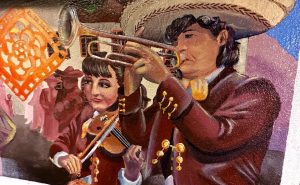
Mexicans in America also use music that maintains collective memory as a force to find themselves. For example, Mariachi is a “binational” genre that has been shaped through historical events; the genre started as a representation of culture-centered life through daily experiences. Over time, it has become a symbol of Mexican identity, even being recognized by UNESCO as an “example of ‘cultural syncretism’” that fosters mutual understanding and dialogue.
Since mariachi music started out with songs that explained relatable events which were played in local areas, it became a voice for the common folk; to this day, it remains a channel for relation between two vastly different worlds–American youth with Mexican roots. It creates the traditions, vernacular, and empathy that the border region provides for, similar to the physical proximity it provides to their land of origin.
Call for Minority Music Programs
We must recognize the contribution of cultural music in helping marginalized people establish their unique identity and maintain their culture. Consequently, we must also increase the funding for programs and laws that increase the learning and continuation of these genres within the education system.
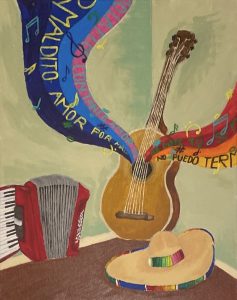
Given the importance of cultural genres, the promotion of cultural musical programs within schools that provide an outlet of personal development is extremely needed. These types of programs will exacerbate the power of the music to bridge cultural and physical divides from their homeland; however, we must also be aware of the limitations and consequences that come with this such as the lack of teachers in these niche musical fields and the commercialization of culture.
It is crucial that we urge for funding and educational initiatives that highlight the proper teaching of Mexican folk music. We can ensure that future generations will continue to remember their stories of the past, establish their individuality, and maintain their heritage by making it available to the masses.
Sources
Marcus, Kenneth H. “Mexican Folk Music and Theater in Early Twentieth-Century Southern California: The Ramona Pageant and the Mexican Players.” Journal of the Society for American Music, vol. 9, no. 1, Feb. 2015, pp. 26–60, https://doi.org/10.1017/s1752196314000534. Accessed 15 Mar. 2022.
Alcántara, Adriana. “A Binational Cultural Heritage.” Hispanicoutlook.com, Hispanic Outlook, 2024, www.hispanicoutlook.com/articles/binational-cultural-heritage.
Cruz, Rachel. “Música Del Mariachi: Conservator of Mexican Culture and Heritage.” Estudios Humanísticos. Filología, no. 45, 22 Dec. 2023, https://doi.org/10.18002/ehf.i45.7694.
Demorest, Steven M., et al. “An FMRI Investigation of the Cultural Specificity of Music Memory.” Social Cognitive and Affective Neuroscience, vol. 5, no. 2-3, 24 Dec. 2009, pp. 282–291, https://doi.org/10.1093/scan/nsp048. Accessed 8 Nov. 2020.
Paredez, Deborah. Selenidad: Selena, Latinos, and the Performance of Memory. Excerpt from Introduction, Duke University Press.