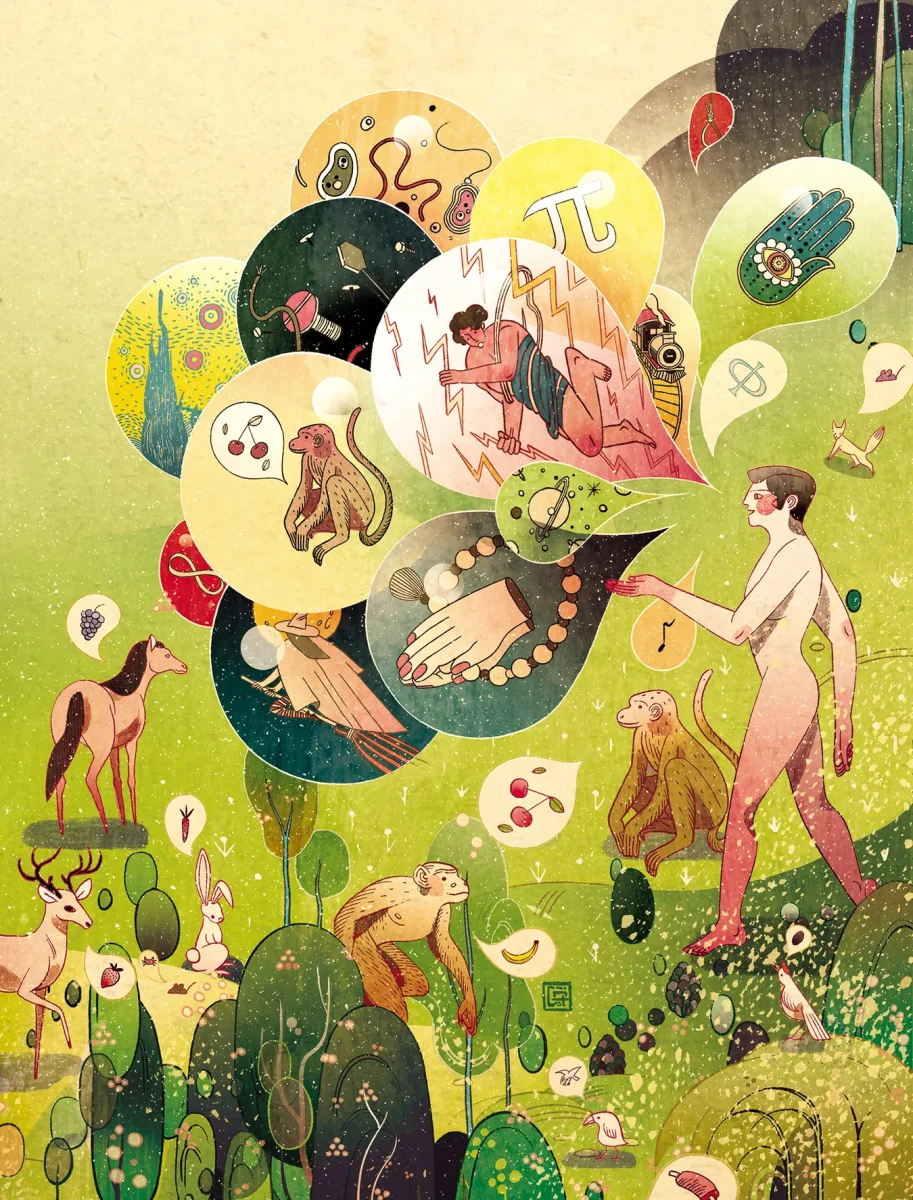
“When you want something, all the universe conspires in helping you to achieve it.” This quote from Paulo Coelho’s 1988 novella, The Alchemist, introduces the longstanding concept of manifestation. It is the idea that through your own thoughts and feelings, you can realize your goals in the material world around you. You may have seen this concept exemplified on social media platforms like Pinterest and Instagram through vision boards and ‘New Year rebrands,’ but the roots of manifestation can be traced back through centuries.
Origins of Manifestation

The idea of manifestation appears in the Vedas (foundational Hindu texts), dating back to 1500-1200 BCE. The oldest of these, the Rigveda, affirms that reality is created by aligning consciousness with vibrational energy through mantras and repeated intentional thinking. It advises disciples to use religious prayers like Om and the Gayatri Mantra to focus on attracting their desired outcome, transforming their lives from within.
This concept remained prevalent in Greco-Egyptian practices through the principles of Hermeticism. Hermeticism was a syncretic philosophy symbolized by a figure named Hermes Trismegistus, a blend of the Greek god Hermes and the Egyptian god Thoth. It provided its followers with seven pillars through which they could attain a deeper understanding of themselves and the surrounding world. One of these seven laws was that of vibration, which asserted that everything from feelings to matter was composed of vibrations, and by challenging one’s own vibrations, an individual could alter the material world surrounding them.
A Modern Retelling

These philosophical frameworks structurally supported the scientific discoveries of influential figures like Galileo Galilei, Robert Boyle, and even Isaac Newton during the Renaissance. The underlying truth of manifestation has persevered through time but has only recently been thrust into the spotlight, notably due to Rhonda Byrne’s self-help book, The Secret, which rebranded manifestation as “the law of attraction.” This law states that like attracts like, meaning the aspects of your life you focus on only increase the frequency of those experiences, whether they be positive or negative. This phenomenon does not operate on magic, nor does it function through wishful thinking; it is, in fact, simple neuroscience.
Science, not Spectacle
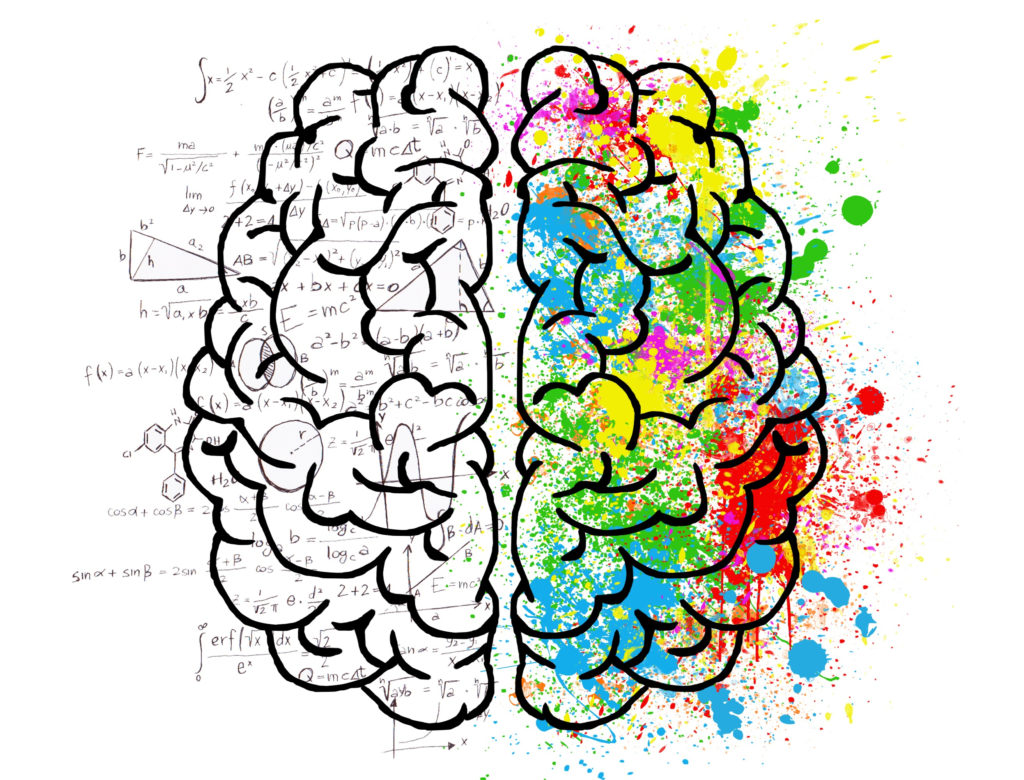
When you set a goal or make a vision board, you accept a possible reality into your mind and constantly feed into it. Due to the brain’s neuroplasticity, it often associates imagination with reality, since imagination and perception rely on overlapping brain circuits. So even though you may be thinking of a future that doesn’t exist yet, it does in your consciousness and reads very similarly to your neural pathways. The more you vividly imagine yourself in a position, the more real it becomes, the easier it is to actually take the steps to become the version of yourself you imagine.
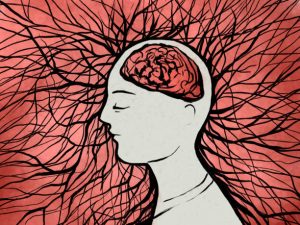
Furthermore, when you think about something consistently, it strengthens neural pathways in your brain about that particular topic. Your reticular activating system is a network of neurons in your brain that constantly filters the sensory input you receive on a daily basis. It’s tuned to notice what your brain prioritizes, so when you repeatedly imagine something, you’re subconsciously training your system to notice opportunities related to that goal.
For example, if someone developed a new interest in red cars, they would suddenly start noticing a number of red cars in their environment that they didn’t notice before. No, this is not because the number of cars in their neighborhoods significantly increased. Their new focus has simply opened their eyes to a world that was already there. This is why it may seem like a funny coincidence to them that the universe has presented things that align with their interests. A similar response is found in the placebo effect when patients are given a placebo or sugar pills in place of medicine, but report feeling decreases in pain. In a way, there’s an aspect of confirmation bias since, physically, you accept what you have already accepted mentally.
In Practice
In your day-to-day life, you may already have unknowingly utilized manifestation. For example, if someone has ever advised you to attend an interview “dressed for the job you want, not the job you have,” you’ve subscribed to the notion of manifestation. Essentially, when you create an image of the desired version of yourself and act accordingly, those around you really have no choice but to interpret that image as the truth, even though it may not fully be who you are yet. “The truth is not a thing of fact or reason; the truth is just what everyone agrees on.” In the recent release of the screenplay, Wicked, the Wizard of OZ insightfully points out that perception shapes reality. That is the crux of manifestation: taking action to make your truth THE truth.

Sources:
https://www.nationalgeographic.com/history/article/the-ancient-origins-of-manifesting
https://news.stanford.edu/stories/2024/05/james-doty-on-the-neuroscience-of-manifestation
https://www.self.com/story/neuroscientist-science-behind-manifestation