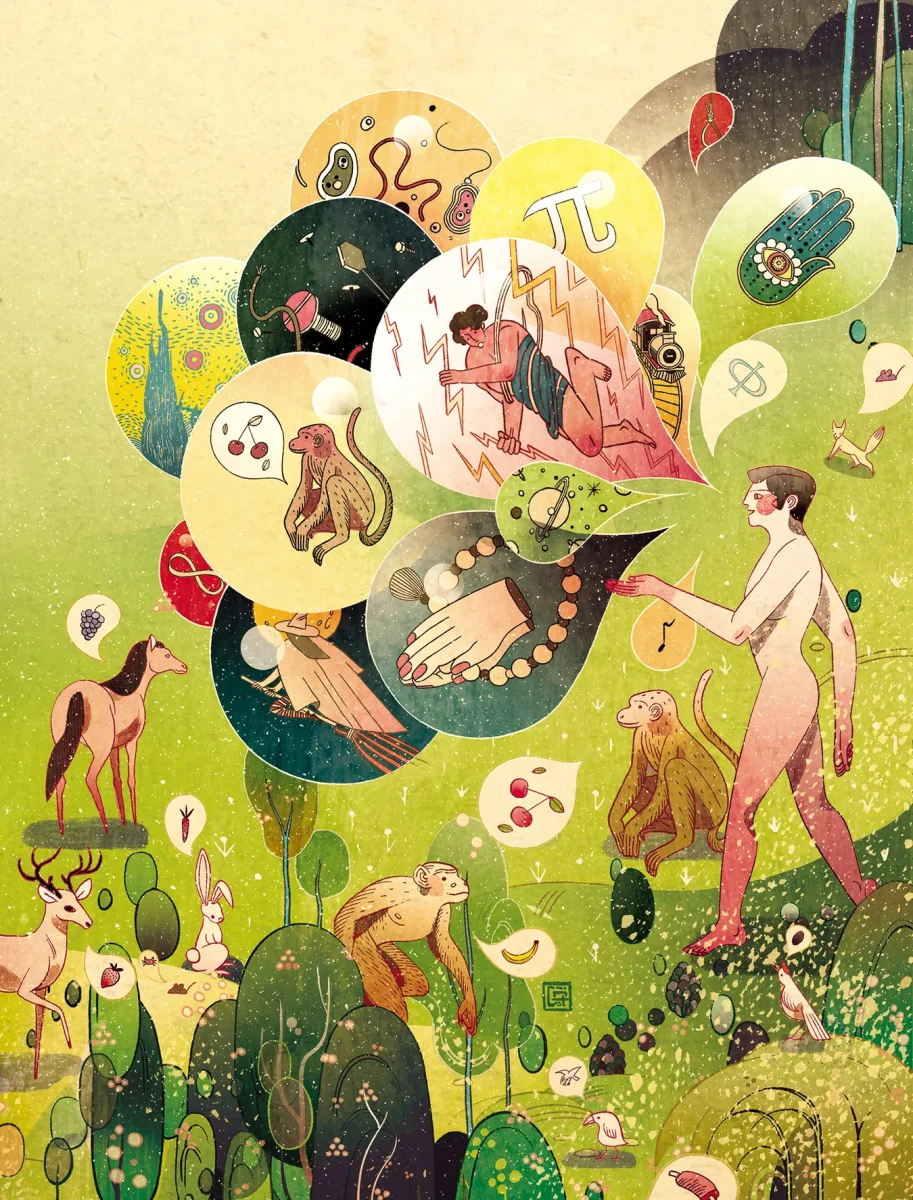
Since the beginning of time, humans have been storytelling about the mundane and mysterious. Whether it’s explaining how animals get their coloring or why time exists, there’s a story for everything. The night sky, in particular, is special in this regard. People from all cultures see the stars and, by extension, constellations. This leads to several unique stories about the same constellations from different parts of the world. However, with so many constellations and stories to choose from, which should you know about? There are 88 constellations in total seen around the world, but North Texas can only view roughly 10 year-round. In autumn and the upcoming November, the constellations Orion the Hunter, Ursa Major, and Cassiopeia can be seen with the naked eye. Each of these constellations has its own unique story that varies across regions, so let’s explore them.
Orion, the Hunter
Rising in the east sky and setting in the west, Orion, the Hunter, has roots in Greek mythology. Because Orion, the Hunter, is one of the oldest Greek myths we have, dating back to 9 BC, there are several different versions of the myth. The oldest version of the myth makes Orion the son of Poseidon, and after his failed love with Merope, he goes to Crete. There he meets the goddess Artemis and becomes a hunter. Even in this myth, the circumstances that led to his death vary. Some say Apollo, Artemis’s twin brother, was jealous of Orion and had Artemis accidentally kill him. Other sources say that a giant scorpion, who would become the constellation Scorpius, was sent by Gaia to kill him. Either way, Zeus turns Orion into a constellation, immortalizing him forever. Orion, the hunter, is often seen as a symbol of strength and sometimes hubris.
Ursa Major
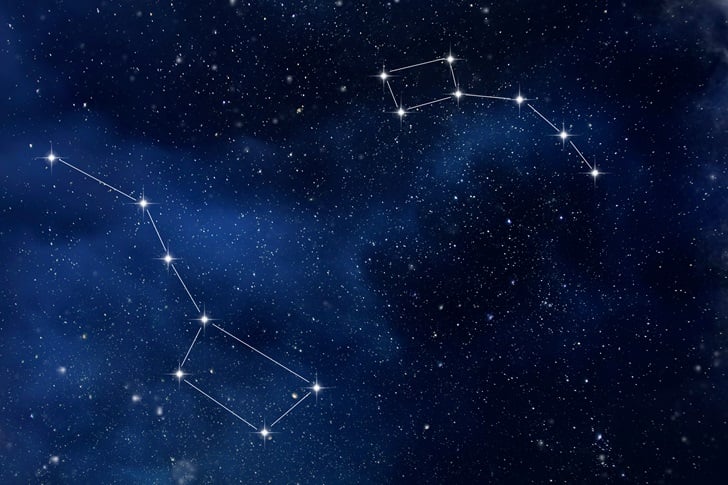
Moving to the west, Ursa Major can be seen rotating clockwise around the star Polaris. Additionally, the constellation “the Big Dipper” helps make up Ursa Major. First described in North America by the Iroquois tribe, Ursa Major is often depicted as a bear, with the Big Dipper being the hunters that follow it. In the surviving myth, a monstrous bear becomes a huge issue for the village. So, to solve this issue, 3 warriors and a 4-eyed dog drive the bear out of the village. This long chase ultimately led them to the stars. Eventually, when the hunters killed the bear in the fall, its red blood caused the leaves to change various warm colors. In the spring, the bear is reborn stronger, and the chase begins over again. While the exact meaning of Ursa Major can’t be traced, it’s often interpreted as a story of perseverance and bravery.
Cassiopeia/Wang-Liang
Last, but not least, the constellation Cassiopeia rises in the northeast and sets in the northwest. Though Cassiopeia is the common western name of this constellation, in Ancient China, it was observed as the great chariot of Wang-Liang. In this myth, Wang-Liang is asked to drive a chariot for a hunter named Hsi. During the first round of hunting, Wang-Liang failed to snare a single bird, earning him harsh criticism from Hunter Hsi. He specifically proclaimed that Wang-Liang was the worst charioteer he had ever seen. Irritated by his comment, Wang-Liang tried again; this time around, he bagged ten birds in just one morning. Thoroughly impressed, Hsi changed his mind and asked Wang-Liang to be his full-time charioteer. Wing-Liang, however, rejected this offer, citing that the first time he obeyed the rules and the second he cheated to make it easier for Hsi to catch the birds. Wing-Liang explained that he would never drive for a Hunter who was not honorable. The constellation of the great chariot of Wing-Liang represents honor and integrity.
Overall, from the west to the east, all constellations have valuable stories behind them. Sometimes these stories are based on their movement in the night sky; other times they serve as cautionary tales. Though in North Texas we can barely see a fraction of these amazing constellations, every once in a while take a moment to appreciate the night sky. You could try to find these constellations or go to your local planetarium. Either way, the night sky has a story for everyone to enjoy.
Sources
https://www.native-languages.org/cayugastory.htm
https://www.britannica.com/topic/Orion-Greek-mythology
http://www.ianridpath.com/startales/cassiopeia.html
http://judy-volker.com/StarLore/Myths/Cassiopeia.html
https://tpwd.texas.gov/education/resources/keep-texas-wild/stars/student-research-pages-constellations