“Art should comfort the disturbed and disturb the comfortable.” In his words, Mexican poet Caesar A. Cruz highlights the power art has as a means of social commentary. In a world where the truth isn’t always visible, throughout history, art has been highly political and influential when it comes to resistance movements and recognizing change. Archaeological records disclose artworks that inform present-day historians about previous lives more than some written accounts do. This is because a piece’s composition, color, and style are not just a frivolous choice made for aesthetic purposes, but often a purposeful decision imposed to tell a story.
Vanity Fair’s Film
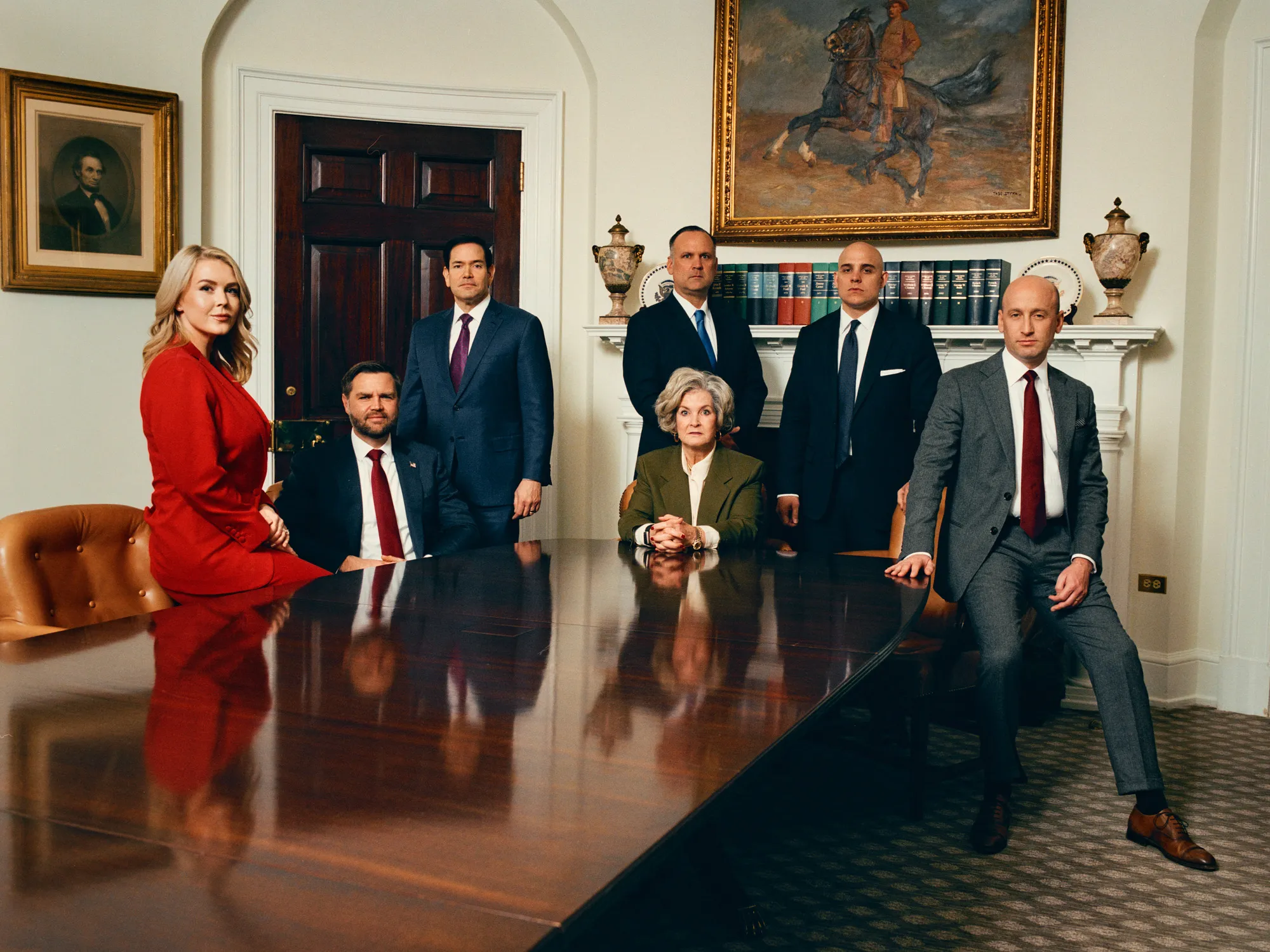
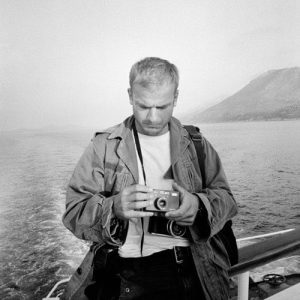
Photographer Christopher Anderson does just this, with his pictures of the Trump Administration team posted by Vanity Fair. These portraits portray the officials in an unapologetic, raw manner, as Anderson intended. Due to their harshly truthful nature, they stirred up much debate and discussion on social media, as people investigated what Anderson’s intentions could have been in photographing these officials in this way and what story these pictures tell.
Up Close and Personal
One of the most notable attributes of the series is the extreme close-ups Christopher Anderson took. He is historically known for his close-ups and contends that he took them on purpose; they were not zoomed in. During the process, officials like Susie Willis even told him she was uncomfortable with their proximity, and he had to take a step back. Audiences wonder whether these unflattering zoomed-in angles were taken with the intention to make these figures look unappealing and purposely highlight their flaws, such as the portrait of Karoline Levitt, which highlights her wrinkles and lip filler injection lines.
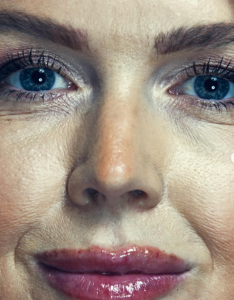
In response to this criticism, Anderson says that he did not have malicious intent; he only “chose not to remove those things… or minimize them,” instead to deliver a truthful representation. This style is a direct contrast to the way celebrities and politicians are normally photographed to look flawless and almost otherworldly. These types of photographs remind us that even these figures have flaws when you zoom in and take a closer look, and what may seem beautiful and effortless from far away may have uncomfortable secrets closer up.
A Subtle Irony
Another “easter egg” photograph that Anderson himself “hoped people might see” is the photo picturing Stephen Miller, the deputy chief of staff for policy and Homeland Security, sitting in a rich, dark green couch positioned before a large painting. The painting depicts Native Americans on horseback crossing a river, returning to their village homes. The contents of this portrait provide an ironic symbolism considering Stephen Miller’s lead part in planning weaponized roundups of immigrants and enforcement of ICE and Homeland Security throughout the states. Anderson thought this contrast to be “kind of interesting and maybe incongruous,” providing his audience with a subtle message through the composition of this piece.
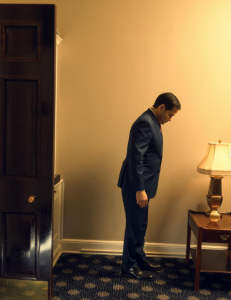
Another slide presents Marco Rubio, the Secretary of State and National Security Advisor, standing in a room alone, turned towards a table lamp. The frame is tilted slightly to the right in the direction he is turned, creating almost a falling sensation that leaves the viewers with a feeling of imbalance and discomfort. The focus seems rather underwhelming, as he is positioned staring down at his shoes, his stature indicating something like shame or embarrassment as he has turned towards the light.
Rama Duwaji made The Cut
These pictures present a starkly different perspective than those of New York’s first lady, Rama Duwaji, posted in The Cut magazine. Two days after her husband Zohran Mamdani’s inauguration, she released her first editorial post. The series, directed by Sylvester Mako, featured Rama in a unique artistic light through composition and her clothes, that was styled by Jessica Willis, a fashion director at New York magazine.
Thinking Outside the Box
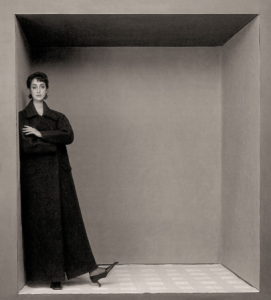
The first frame pictures Rama Duwaji in a circularly geometric dress with her hands folded neatly in her lap, assuming the usual position a first lady poses, but instead of looking at the camera, she is looking off to the side as if interested in something other than her role. In the second photo, she gets up from her stool, which she was sitting at, still staring off to the right, where we find a wall as she is staged in this box-like enclosure.
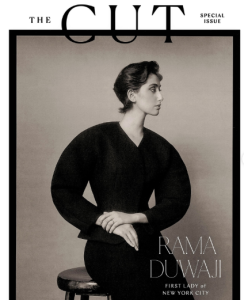
The symbolism of portraying Rama in a box nods to how women married to men in political power often are put in a societal cubby and expected to fit a certain narrative or be an accessory to their husbands. Rama Duwaji acknowledges this standard, setting her scene in this box, but instead of sitting at the stool and assuming her position as first lady, she takes a stand, investigating her own merits as an artist, refusing to give up her identity as an individual woman.
These Hands are Made for Holding Sculpting
The following slide shows her wearing ceramic hands, directly referencing Rama’s profession as a professional artist and ceramicist, highlighting her own contributions in light of her recently attained position. In another post, we see her in vintage attire, and on the wall beside her are actually cut-out images of her own ceramic works, a dish with a face engraved into it, and a dinner plate. In her post, she brings attention to the fact that she has already made a name for herself through her art and style, and she is reaffirming her identity regardless of her relationship to her husband.
A Larger Dream
Her editorial encompasses the essence of New York as a dream. While New York has recently become home to large capitalistic enterprises, its roots trace back to culture, art, and diversity, which Rama personifies through her pieces. Being an Iranian Muslim artist, she is a contribution to what New York was built to be: a home to a varying range of perspectives and appreciation for culture.
Compared to the Trump Administration portraits, these pieces aren’t as harsh but remain genuine and authentic to Rama’s character and are not overly polished to fit a popular art form. Representation and the significance of her being an independent immigrant artist in America’s New York is a direct contrast to the fact that the Trump Administration staff consists of only outwardly conservative white individuals. They show a vastly different perspective of what it means to be American in the current political climate and how these two contrasting American values are depicted in art.
Sources:
https://www.vanityfair.com/news/story/christopher-anderson-white-house-photos-maga-vanity-fair
https://www.instagram.com/p/DSm22_jDr7F/?img_index=2&igsh=aGV3MHhvZjc4bXhx
https://www.instagram.com/p/DSmu6MrCGVx/?igsh=MWszM3RxemQwMDhhcw==
https://www.instagram.com/p/DSUsOvHDpHw/?igsh=bWh3eGptcXdyanB6
https://www.instagram.com/p/DSUsIMjjvll/?img_index=2&igsh=MThoNGI5ZTYwOGR1Mw==
https://www.instagram.com/p/DSV2E6NjiSm/?igsh=MWdvN2tsNHhtY3Z3