
“On this historic mission, you take with you the heart of the Artemis team, the daring spirit of the American people and our partners across the globe, and the hopes and dreams of a new generation. Good Luck. Godspeed Artemis II”. These were the words of launch director Charlie Blackwell-Thompson right before the launch of Artemis II. Millions of people watched their screens as it played live and others actually saw it launch. Regardless, everyone united to watch this historic moment, the Artemis II mission.
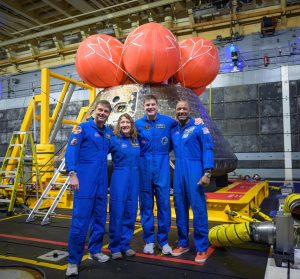
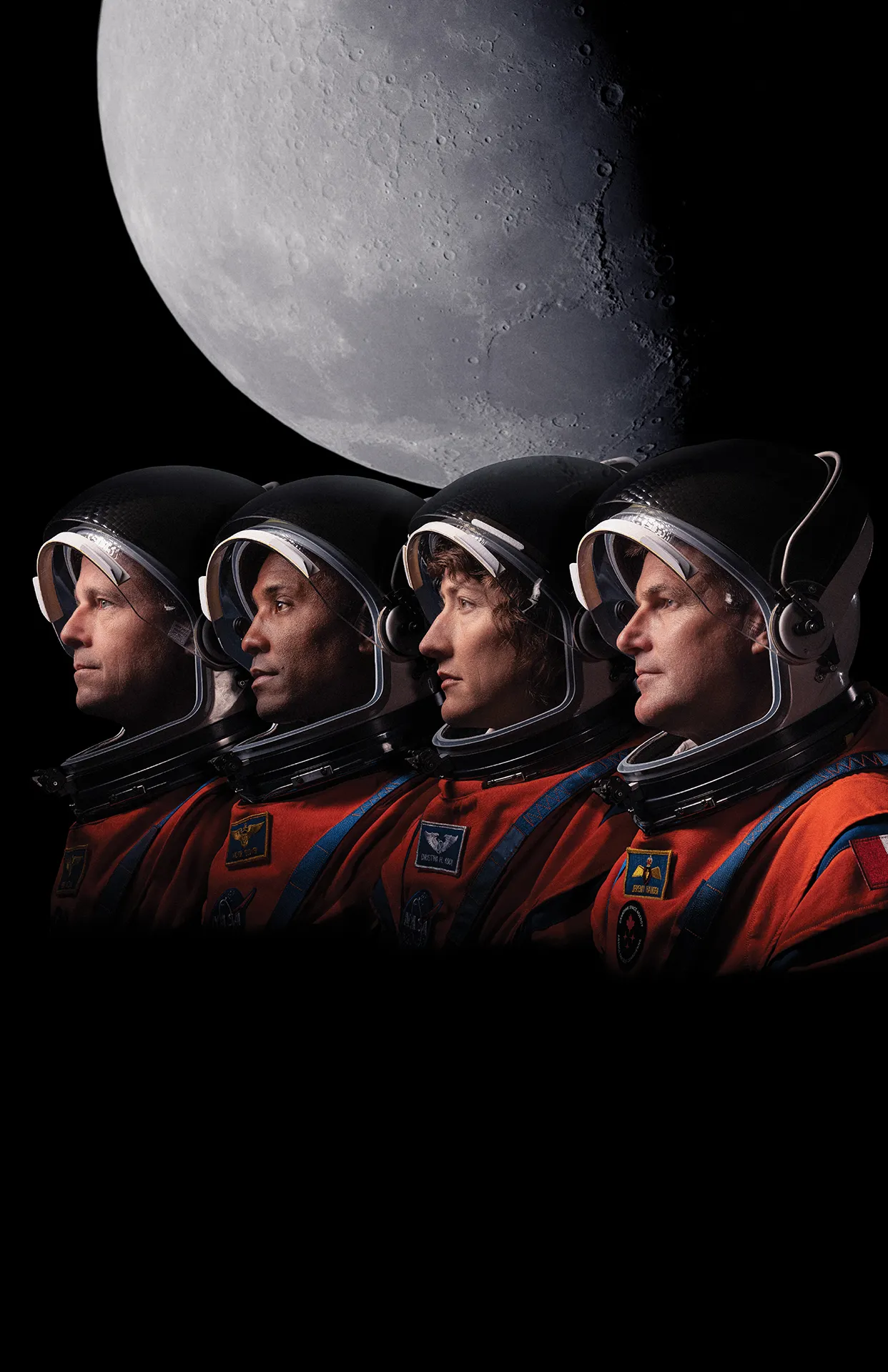
On April 1st, 2026, a four-member crew was launched toward the Moon at the Kennedy Space Center in Florida. This was the first time in 50 years that NASA has executed a crewed lunar mission, the last time being mission Apollo 17 in 1972. For the first time in history, a female astronaut, Christina Koch, would travel to the Moon as a Mission Specialist. NASA commander Reid Wiseman, Pilot Victor Glover, and Canadian Space Agency Mission Specialist Jeremy Hansen were the three other astronauts to fly the Orion spacecraft. These four traveled the farthest from Earth than any other humans (250,000 miles from Earth). This achievement not only set a new milestone for NASA but for humanity as a whole.
Photo by NASA
Artemis II was a 10-day lunar flyby mission designed to orbit the Moon to test the Space Launch System and the Orion capsule life-support capabilities for astronauts. This mission will provide crucial information in planning future long-duration missions and continued space exploration, including sustained human presence on the Moon and eventual missions to Mars. Artemis II is more than a single mission; it is laying the foundation for the success of future missions that could take humanity farther than ever before.
The mission was led by Commander Reid Wiseman, a seasoned Navy test pilot who provided the steady leadership necessary for deep-space navigation. Joining him was Pilot Victor Glover, a naval aviator who made history as the first Black man to venture toward the Moon. Mission Specialist Christina Koch, an engineer and record-breaking astronaut, became the first woman to leave Earth’s orbit, while Mission Specialist Jeremy Hansen of the Canadian Space Agency became the first non-American to journey into deep space. Together, this diverse “Core Four” combined expertise in aviation and engineering to transform their spacecraft, which they nicknamed Integrity, into a high-functioning home and laboratory.

During their 10-day journey, the crew didn’t just test life-support systems; they reached a record-breaking distance of over 250,000 miles from Earth. Yet, amidst the technical rigors, the mission was defined by a global phenomenon known as “#Moonjoy.” This term captured the levity the crew shared with the world, from sharing billion-dollar “biscuit breaks” to hunting zero-gravity Easter eggs. In a deeply sentimental moment, the crew unofficially named a bright lunar crater “Carroll” in honor of Commander Wiseman’s late wife, Carroll Taylor Wiseman. This tribute served as a reminder that while the mission was about scientific progress, it was powered by very human hearts.
The Artemis II spacecraft was a bridge between eras, utilizing “heritage hardware” from the retired Space Shuttle fleet. In a charming nod to history, the crew honored the legacy of Félicité, the first cat in space (1963). They affectionately named a critical part of the landing system after her, jokingly noting that because cats never miss a landing, Félicité would guide them home safely. This blend of cutting-edge technology and historical tribute gave the mission a unique soul, proving that the pioneers of the past were still helping to pave the way for modern lunar exploration.

The historic voyage concluded on April 10th, 2026, with a flawless reentry. The Integrity capsule plummeted through the atmosphere before its parachutes deployed, resulting in a perfect splashdown in the Pacific Ocean. As recovery teams approached the bobbing capsule, the world breathed a collective sigh of relief. The crew emerged healthy and triumphant, having validated the systems that will eventually return humans to the lunar surface. Their return was the definitive proof that humanity is ready to stay among the stars.