The UN, or the United Nations, is an organization made up of 193 countries that promotes international cooperation and peace. Formed shortly after World War II in 1945, the United Nations has mediated several conflicts and provided humanitarian aid to people everywhere. From the International Court of Justice to Security Council, the UN has over 30 specialised subparts. Essentially, delegates from almost every country come and discuss international and sometimes even local issues. Sounds cool, right? Well, there’s a club for it!
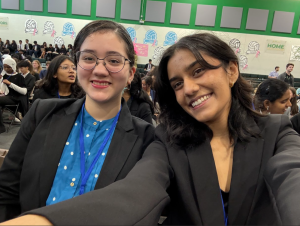
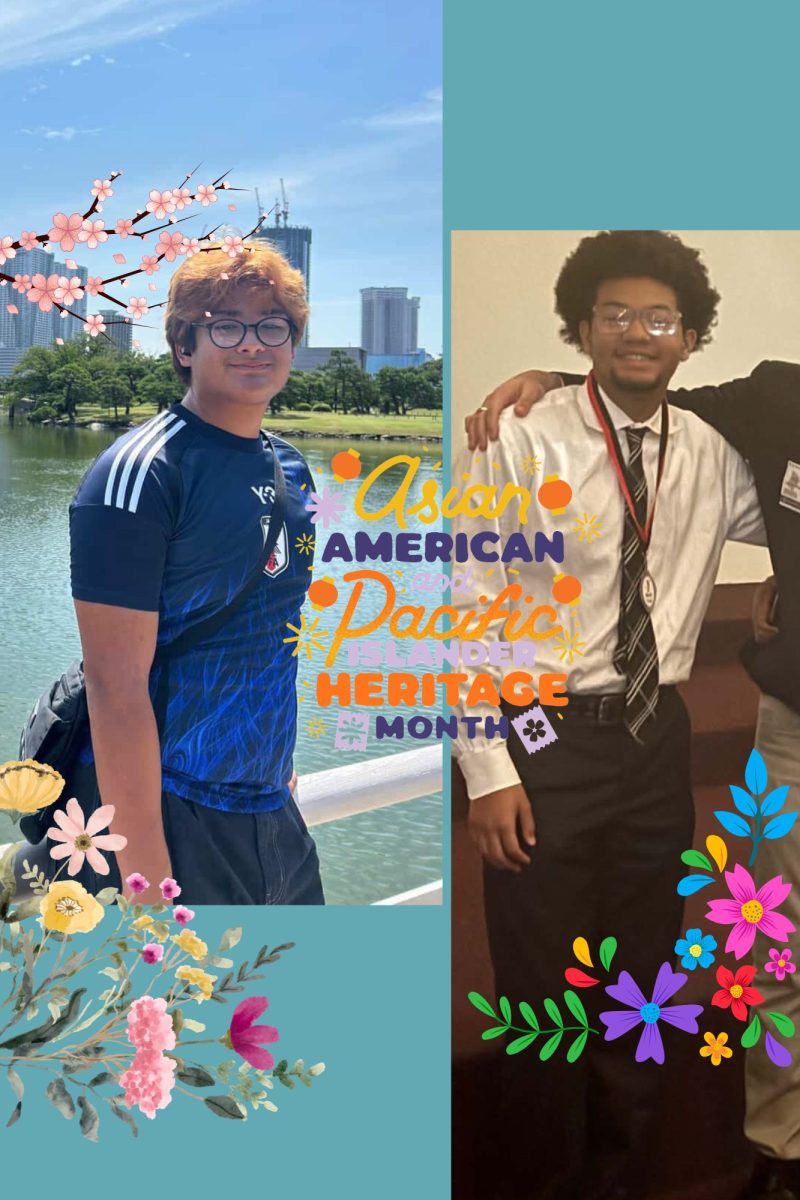
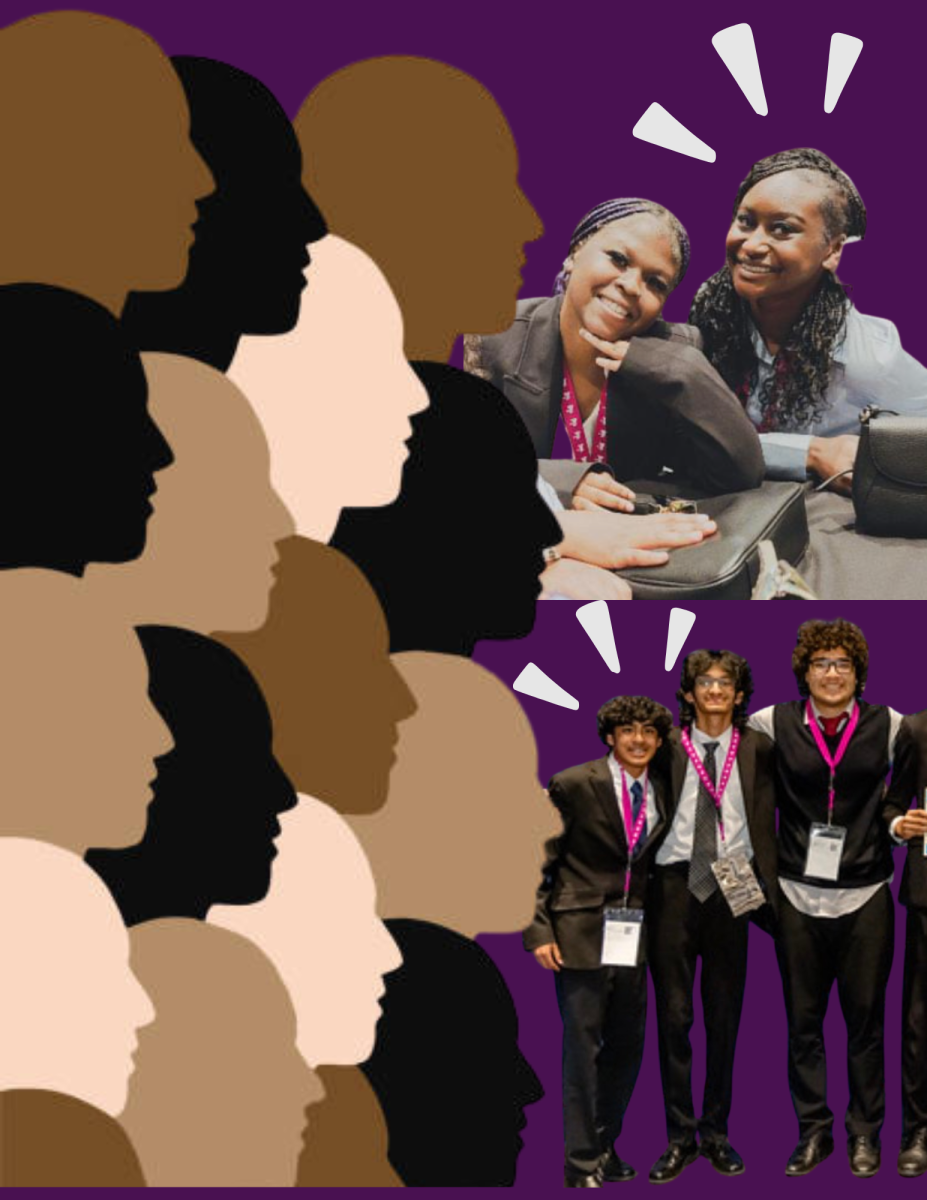
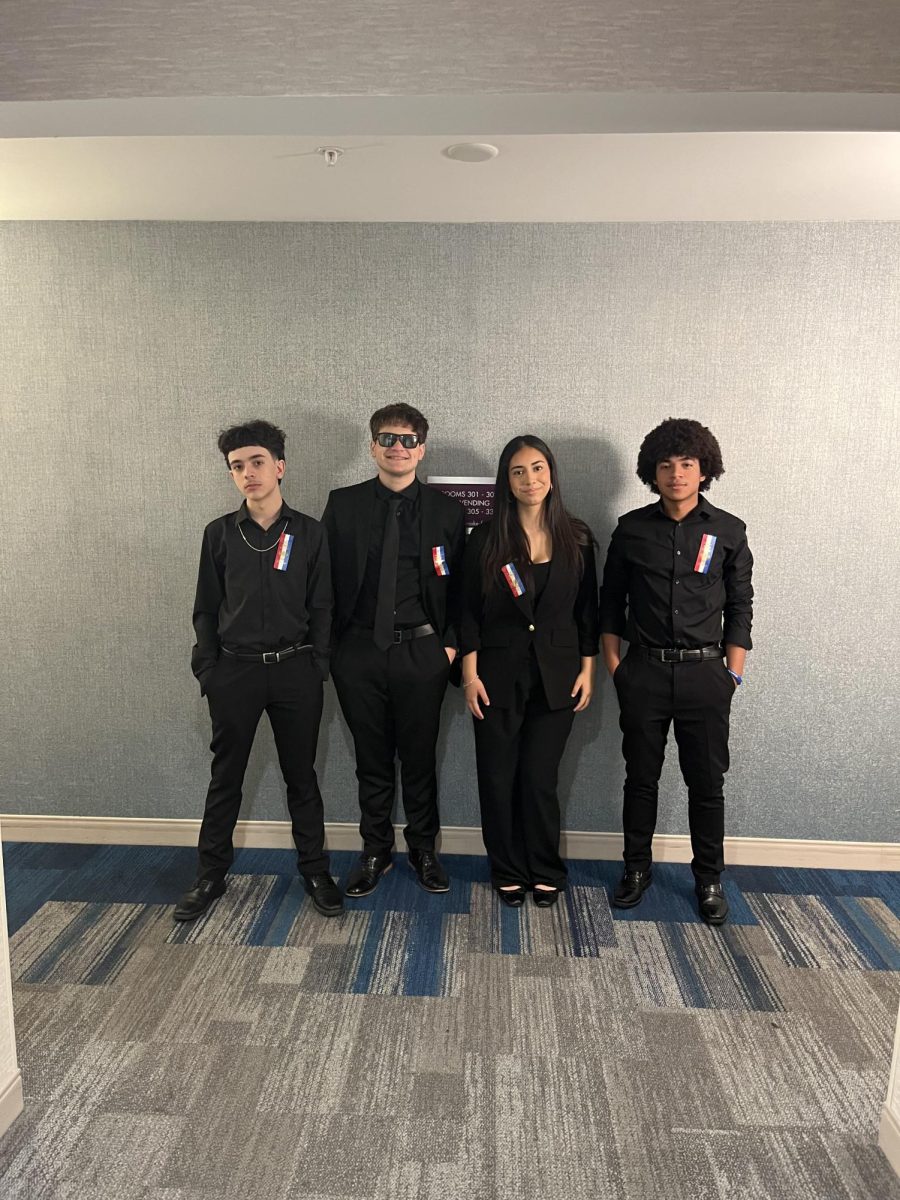
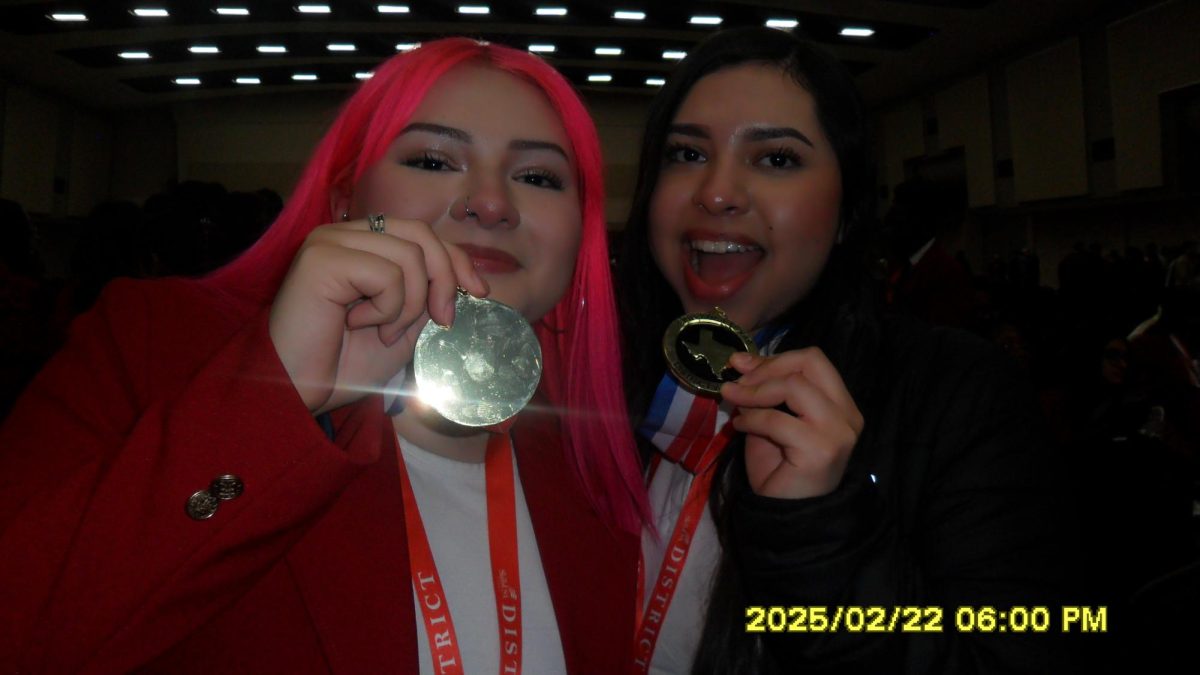
Ashima Yadav and Eva Johnson prior to Opening Ceremony
What even is Model UN, and how does it work?
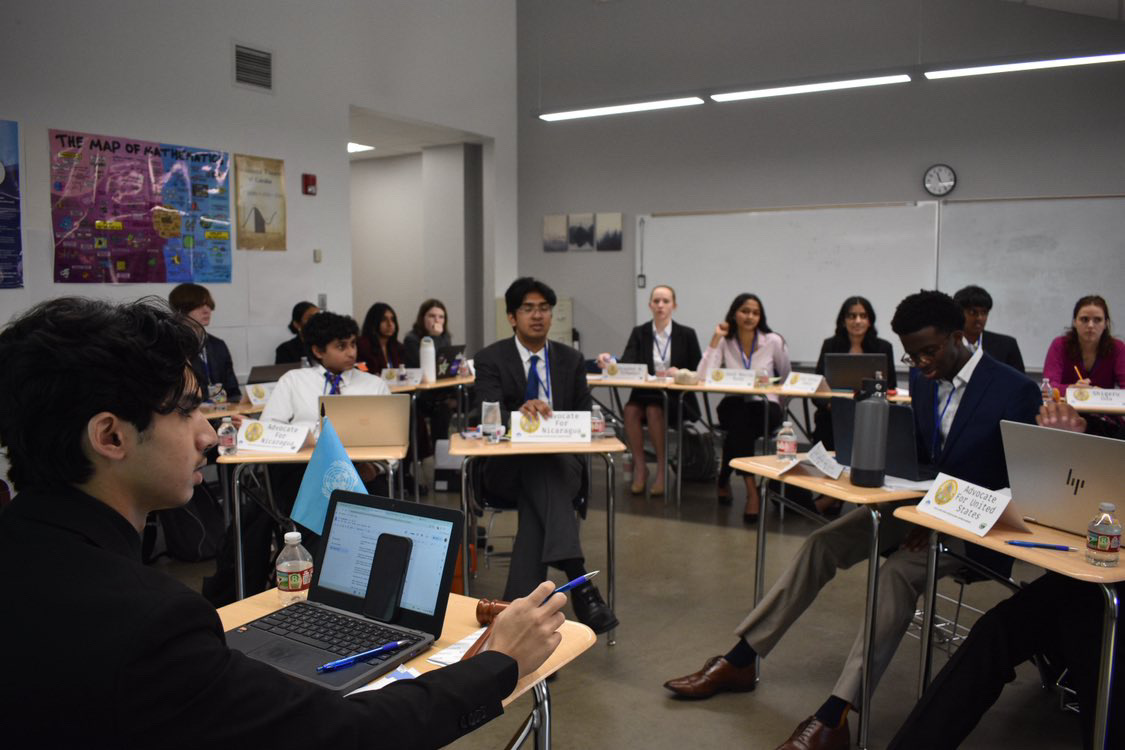
Model UN, as the name suggests, is a simulation of the United Nations. With that said, Model UN, commonly abbreviated as MUN, is a fairly new club at the law magnet. First introduced in late 2023 by Hannah Robles, MUN has only thrived since its inception.
Model UN works as follows:, you become the delegate of a country and, depending on your committee assignment, you debate on a specific topic. By the end of the committee session, every delegate must come to an agreement, known in MUN as a resolution, that aligns with their country’s beliefs. Additionally, like the real UN, committees cover a wide range of topics from ecological sustainability (ECOSOC) to real-time wars (Security Council). Depending on the host, special committees like CRISIS or Historical Security Council are offered. Teamwork, strong speaking skills, and well-thought-out research is key in Model UN.
Novices Symphony Ifabiyi and Eva Johnson competed for the first time in the General Assembly conference
Awards? State? Nationals?!
Unlike other clubs at the Law Magnet, the distribution of competitions is, to say the least, interesting. Within the United States, there is no single, official governing body for Model UN. The closest to such a thing is the YMCA , which has its downsides. Because of all this, conferences are usually one-off events, meaning that they do not have a qualifying system. For example, if there is a school or organization sponsoring Model UN in Austin and someone gets the outstanding delegate, they do not advance to any higher competition.
In the context of awards, sometimes they differ based on the conference. The main three, however, are outstanding delegate, distinguished delegate, and honourable mention. Essentially, they’re the equivalent of 1st, 2nd, and 3rd places in other competitions. Though there isn’t always a higher level, when competing at state or even national conferences, winning such an award or being ranked within the top 10% of delegates is extremely impressive. Even if you don’t win an award, chances are you’ll meet fellow delegates who become your friends long after the conference is over. Because of the teamwork aspect of MUN, friendships develop quickly and can even last a lifetime.
Motion to let other delegates speak
While explaining all about Model UN is fun, it’s really about the experience. I got the opportunity to interview several MUN delegates and officers, including the founder of it all, Hannah Robles, our former president, Amaad Garrett, and our current president, Daniela Herrera.
What made you want to start Model UN?
“I first heard of the idea of MUN getting pushed as a team from Mr. Lyons (shoutout to Lyons!) my freshman year, it was something both he and Mr. Benzvi (also another shout out!) had talked about and after learning about it, as well as the idea they had for what they envisioned the team, was something that honestly brought me out of my comfort zone. I had experience doing mock trials, and that already brought out a new perspective of defining my limits, so MUN was the way to go moving forward. I’m grateful I was close enough to both Mr. Lyons and Mr. Benzvi where them seeing my interest, allowed me to be more involved in the recruitment process, to even the establishment of the team, and it taught me to think as a leader who is learning along the way with her team.” – Hannah Robles
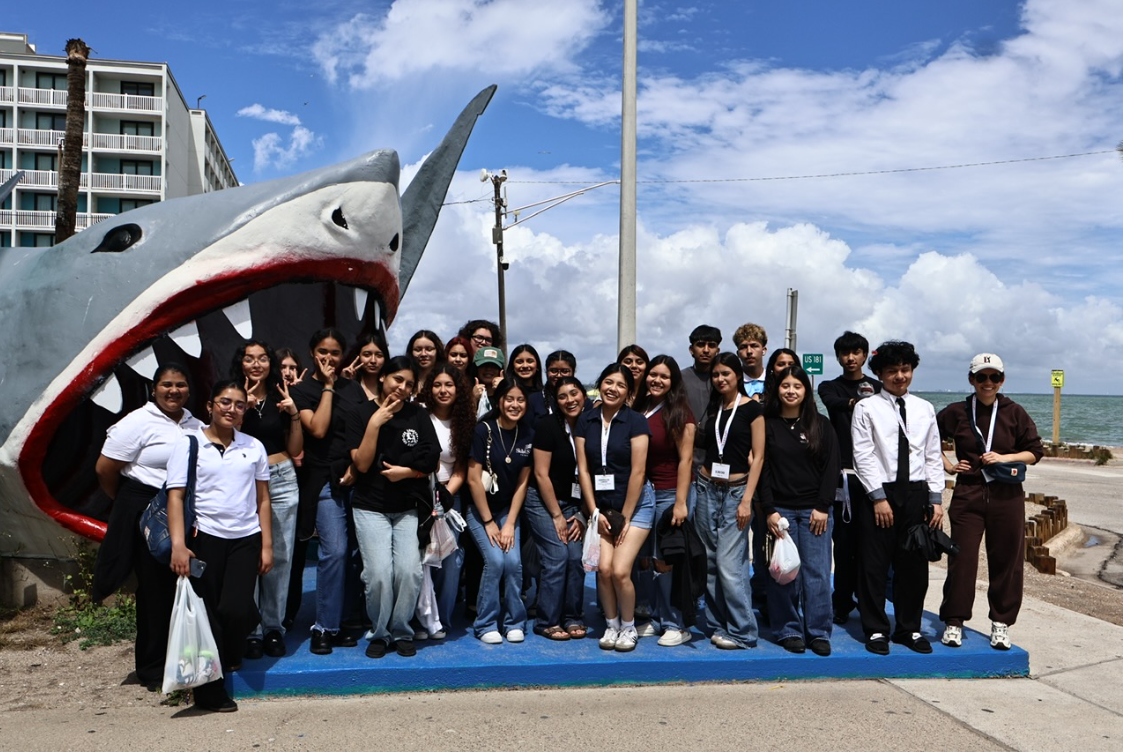
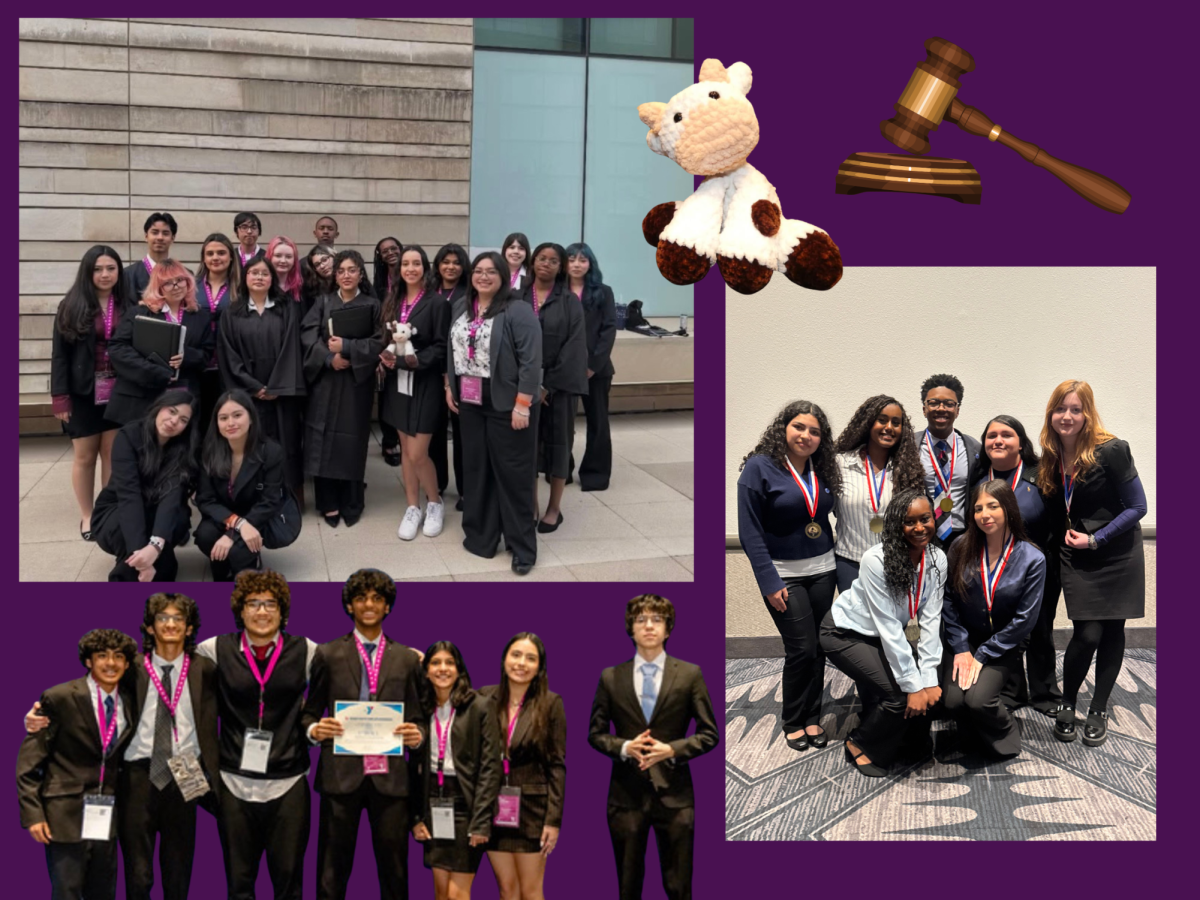
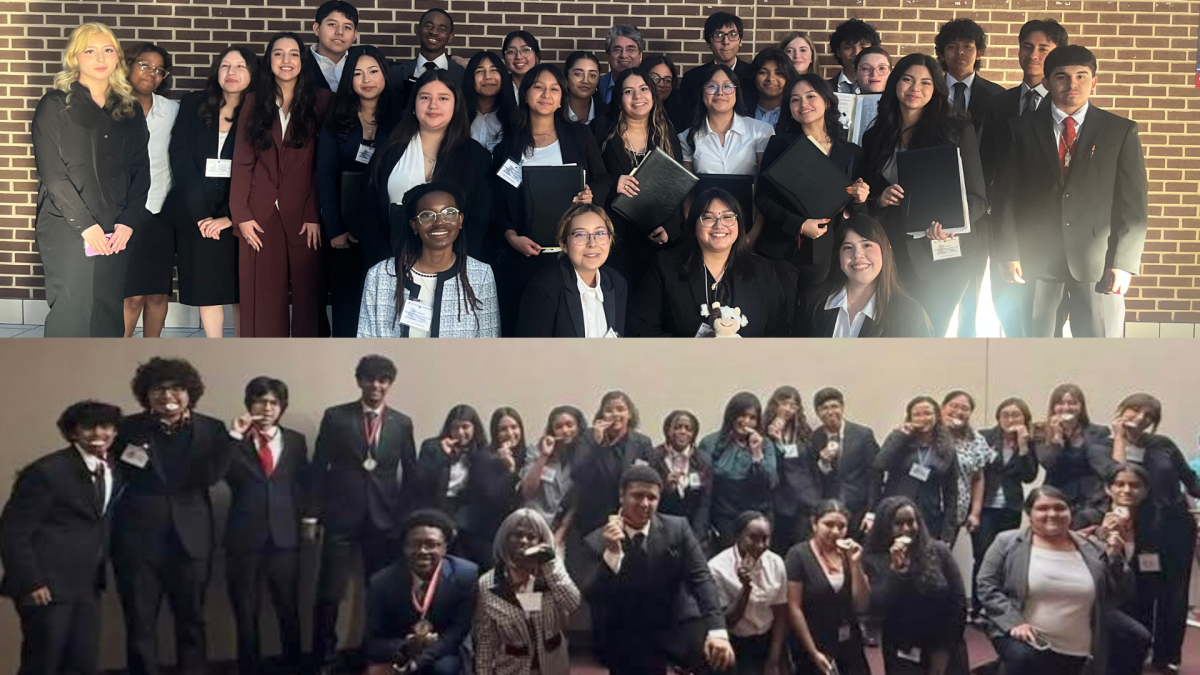
Delegates eagerly waiting for awards to be announced.
How would you describe Model UN in 3 words?
“Three words to describe MUN: Reflective- this a simulation based on what actual states go through in the UN, and you (as the delegate) get to experience that feeling! Diverse – you learn so much from other countries you have never heard of or countries you thought you knew, always something new! Which leads to my last word, scholarship- I was constantly learning in MUN, from committee procedure to country research and even how to lead a team effectively while learning the ropes myself.” – Hannah Robles
“Chaotic yet strategic” – Daniela Herrera
“Fun, Intellectually-Stimulating, and Insightful.” – Amaad Garrett
“Unity, Research, and Motion” – Chastity Adams
What did you learn from Model UN? (either socially or academically)
“Academically, I gained firsthand knowledge on research and understanding a basis of international law, which was a lot on a 16-year-old with little guidance, but it also sparked my interest in international politics and affairs. Socially was a different story, I learned how to be civil. Not in the sense of aggressiveness, but rather to have civil conversation in the midst of disagreement. Not all countries will have the same stance as you and in simulations it’s important to have these difficult conversations while getting agreements across. And the older you get it’s a tough skill many people aren’t equipped with or understand how to deal with disagreement in productivity. It’s helped me in many settings like seminars and lectures, to conversations with friends and colleagues who grew up in different backgrounds than my own.” -Hannah Robles
“I learned how to speak confidently, work with different people, and understand global issues better.”- Daniela Herrera
“Model UN taught me how to negotiate, advocate and articulate ideas with academic proficiency. The structure and procedures we were required to adhere to prepared me to speak and interact in formal spaces, more specifically political spaces. I’ve appreciated the experience I had in MUN as it exposed me to the environment of politics prior to engaging in it in reality.” – Amaad Garrett
“I’ve learned to speak in a timely manner in a room full of people AND developed critical research skills.” – Chasity Adams
Out of all the competitions you went to, which was your favorite and why?
“Since we were a relatively new program when I was on the team we didn’t get to compete as much as we would have liked to, but my first competition always sticks with me. We had two nations that year, Trinidad and Tobago and Tunisia and I remember representing Tunisia in SPECPOL (our topic was debating the classification of Schedule I drugs). We had prepared to the best of our ability and all of us were nervous but had hopes to do our best and learn from the conference. It was only 6 of us and we didn’t win anything, but it was a stepping stone for us as a team.” – Hannah Robles
“My favorite was my first competition because the committee was fun, the debates were engaging, and the people were great to work with. It’s also nice to see how much I’ve grown since my first competition to now being a senior and competing for the last time.” – Daniela Herrera
I’d definitely say the last conference I participated in, in Coppell, was my favorite because I had the privilege of winning an award for the first time in our MUN program’s history. It felt like at that conference, everything I had learned and experienced previously really came together and produced something memorable. I anticipated winning an award within my committee, but not winning the best award (top delegate), so I was really excited.” Amaad Garrett
“My favorite one is honestly my first competition because I remember how I was so nervous and not that confident, but some of my teammates helped me out, answered all my questions, and made my experience there joyous, and now making me more confident in my future competitions.” – Chastity Adams
In conclusion, Model UN has something for everyone. Whether you’re interested in international policy or simply want to make friends, MUN is the place for you. Held every Monday in room 213 by Mr. Lyons and Mr. Benzvi.
Your donation will support the student journalists of Judge Barefoot Sanders Law Magnet. Your contribution will allow us to purchase equipment and cover our annual website hosting costs.