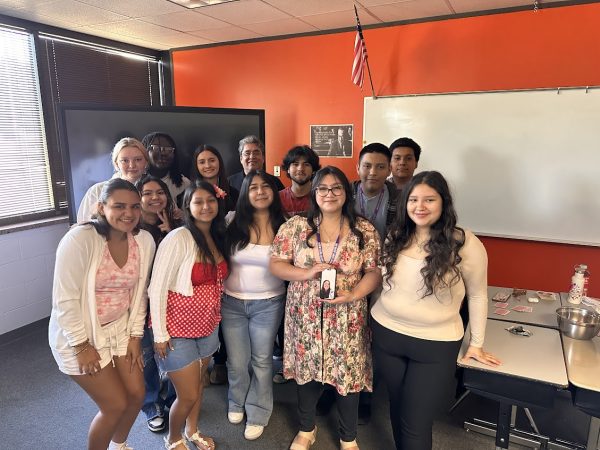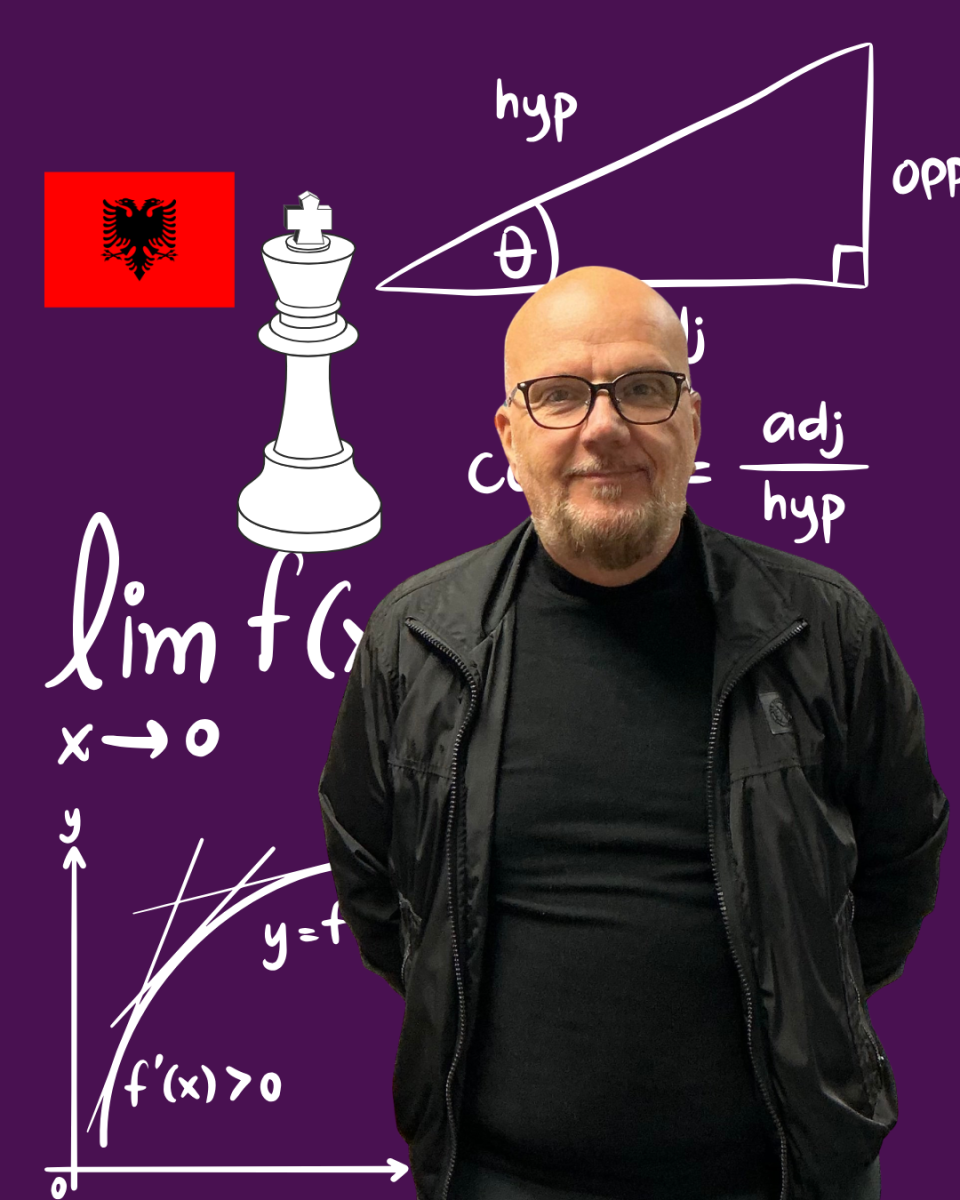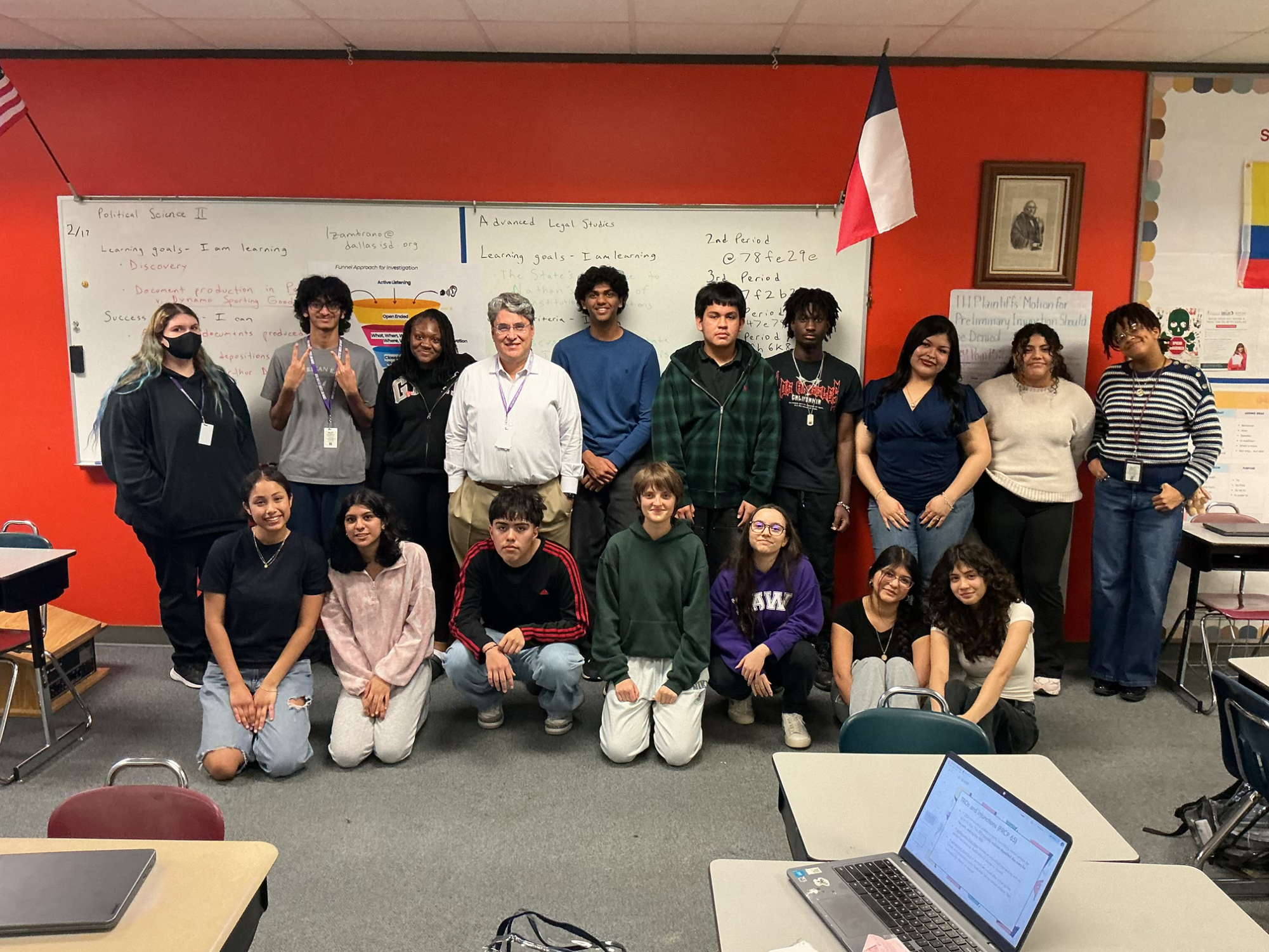
There’s rarely a day Mr. Zambrano allows his students to leave his classroom without their backpacks at least one or two pages of notes heavier. Topics of law spanning from torts and contracts to methods of properly debating are all covered in his class. The classroom environment is seldom described as boring or dull, as it is quite the opposite. Each day begins with a bellringer, has a few heated but good faith debates in between, and ends with a loud “Have a good day!” to send everyone off to their next class or home. Whether you, the reader, are a prospective Law Magnet student or an upperclassman looking fondly back on memories of Political Science II, it’s always good to know what’s going on in Mr. Zambrano’s class.
Day to Day
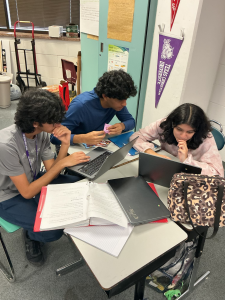
The average class period starts with either a fresh bellringer such as beginning to annotate a case or a few extra minutes to finish a worksheet from the last class. This can then transition into many different paths for the day, but most often you will have to get your notebook out, ready to take notes on the upcoming lecture. Mr. Zambrano seldom spends more than 30 minutes speaking beside the Promethean however, as the majority of the class is spent on the application of concepts learned during the first half of the 95 minute class. This can come in many forms that range from filling out a worksheet to, as has happened recently, negotiating a contract for the sale of a home in partner groups.
A few weeks ago, students were divided into groups of two and given a confidential packet with their ‘character information’ within it. Some groups received a packet detailing the seller, Tracy, or the buyer, Pat. Tracy’s character information mainly explained that the house was her uncle’s, and that he was a graying old man who needed to move out of the deteriorating house before he could no longer maintain its poor condition, but still needed ample time to move out. Tracy is under the impression that the home is being purchased by a growing family to live in for the foreseeable future. Pat’s character information packet tells a different story. Pat is in reality an agent for a corporation that intends to turn the Victorian home into a parking lot to meet parking space requirements for the apartment complex they were building in the lot adjacent to the home being sold, and they needed to begin construction soon. The packets intentionally had some conflicting priorities for each party to invoke interesting negotiations and solutions to the disputes. One of Tracy’s priorities was the preservation of the historic home, especially the wooden siding. But that would obviously have to be torn down in order for a parking lot to be built on the lot. What resulted during class was most of the classes’ Pats simply not disclosing that they intended to tear down the home and coming up with slippery ways to bypass this little request from the seller in the way of their parking lot, as well as many betrayed Tracy’s.
Projects
A bulk of the work in Political Science II is project based. Whether it be a moot court trial, a debate, or a capstone project, most of the class’ topics are topped off with a final project for students to apply what they learned during class in unique ways. In one such project, periods of the class got to vote on a subject for a debate after spending a few classes learning about what makes up a persuasive and effective debate argument. Some periods chose the proposition “AI generated videos should be banned”, while others chose “Government should enact stricter gun control laws”. The subjects to vote on were all of interest to students and resulted in the concepts learned during class being applied in a way that will lead to them being well cemented in students’ memories for the future. Debate day went as planned, and a majority of the class performed so well they received between high 90’s and 100’s.
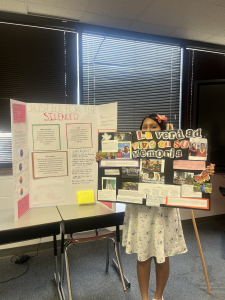
A more long-term project students have been working on is the capstone project. For this, students must choose a cause they care about and begin to plan an impact based initiative to support their cause. The final project includes an oral presentation, a written work describing the project, a proposal for advocacy relating to the issue, and a creative component. The process begins with simply picking a cause, specifically one that in some way must tie to the law or government, and brainstorming potential solutions for that cause. Later on, this solution will be broken down into multiple tasks with due dates that will become individual grades for each action item being completed on time. Right now, students are only at the beginning of this calendar of advocacy related tasks.
Another project Mr. Zambrano’s students have done is a moot court trial. This, as the students learned during class, is an appellate trial taken to a court of appeals from a district court. They had roughly 3 weeks to read the case, study the case law associated with it, and put together a structured argument that would be given in class alongside a co-counsel against the opposition. The students learned how to put together a moot court manilla folder, complete with case summaries, key facts, arguments, and because most in the class were beginner mooters, their scripts to read off of. The day arguments were due to be presented, students came into class nervous, clutching their manilla folders in shaking hands. In order to better understand the process of a real moot court competition, each student who wasn’t judging or giving their argument was given a score sheet to rate their classmates’ performances. Overall, the arguments went well for the previously anxious students. At the end of the day, everyone participated and received feedback from both Mr. Zambrano and the rest of the class.
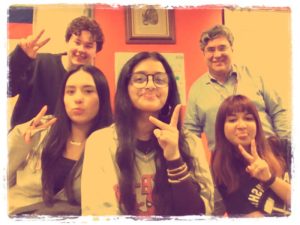
All in all, Political Science II is a class described by its current and past students as one that never felt repetitive, kept them engaged, and made learning things considered by many as mundane topics fun. It is a class characterized by breaks to keep the mind fresh and enjoyable projects that help solidify your understanding of any given subject. Mr. Zambrano’s Political Science II class is definitely one that can be taken over and over again without getting bored.